FROM OUR CEO
The Sum of Our Experiences
I s it true that our relationship with money is a direct reflection of our parents’ or guardians’ attitudes toward finances? This question was posed to me at a conference several years ago, and it has stuck with me. While it seems obvious that our childhood experiences play a significant role in shaping our behaviors as adults, the profound impact on our financial decisions and how we think about money is certainly something I underestimated.
Growing up, my parents’ views on money were starkly different. My mother enjoyed the hunt for a good deal, proudly discovered ways to use coupons and believed in saving for a rainy day. On the other hand, my father believed in the value of a reputable brand, prioritized quality over quantity and cherished unique experiences. Growing up with consumer models that were complete opposites was certainly confusing for me as a child, but it imparted valuable lessons on the importance of both saving and investing, as well as the power of choice.
The concept of choice has become a recurring theme in my financial journey. So, I wondered: How has the psychology of money influenced my decisions (both big and small) and how might I improve my financial success in the future?
I am not a financial expert by any means. I am, however, constantly trying to improve all aspects of myself and seek to identify where I might remove roadblocks to achieve greater success. Pondering this triggered a deep dive into my psychology with money.
I asked myself:
• Do I have an abundant (plentiful) or scarcity (frugal) mindset when it comes to: saving/spending/investing/donating?
• What childhood experiences, memories and stories have influenced these mindsets?
• Looking back, how have my finances been positively or negatively impacted by these deeply ingrained mindsets?
• Where do I need to let go of the past and shift my personal narrative to cultivate a more robust financial future?
By unraveling the threads connecting childhood and financial decisions, I gained valuable insights that will empower me to make intentional choices, ultimately shaping a more secure and prosperous financial future. And maybe even more importantly, as a parent, I am evaluating the experiences and lessons that I may have imparted on my children regarding money, and how those lessons may need to change.
This exercise required both self-reflection and examination of past experiences. It was truly transformative for me, and I hope it will be for you, too.
SUCCESS® magazine May/June 2024, Volume 67, Issue 3 (ISSN 0745-2489) is published bimonthly by SUCCESS Enterprises LLC, 5473 Blair Rd, Suite 100, PMB 30053, Dallas, TX 75231. Periodicals postage paid at Dallas, TX and additional mailing offices. POSTMASTER: Send address changes to SUCCESS magazine, P.O. Box 292144, Kettering, OH 45429. SUBSCRIPTIONS: U.S.A., 6 issues $24.99; Canada, 6 issues $36.99; International, 6 issues $49.99. To subscribe to SUCCESS magazine or to receive our free weekly newsletters and online exclusives, log on to SUCCESS.com. CUSTOMER SERVICE: For service on your subscription, including renewal, change of address or other customer service matters, call 800-570-6414, send an email to CustomerService@SUCCESS.com or write to SUCCESS magazine, P.O. Box 292144, Kettering, OH 45429. Please include your mailing label. ARTICLE REPRINTS: Call 866-782-2377. ARTICLE PROPOSALS and unsolicited articles can be emailed to Editor@SUCCESS.com or mailed to Editor, SUCCESS magazine, 5473 Blair Rd, Suite 100, PMB 30053, Dallas, TX 75231. Submissions specifically for SUCCESS.com should be sent to WebEditor@SUCCESS.com. SUCCESS magazine cannot process manuscripts or art material, and we assume no responsibility for their return. ©2024 SUCCESS Enterprises. All rights reserved. Material may not be reproduced in whole or in part in any form without prior written permission. Printed in the U.S.A.
©MIKE D’AVELLO
FROM THE EDITOR
Achieving Financial Abundance
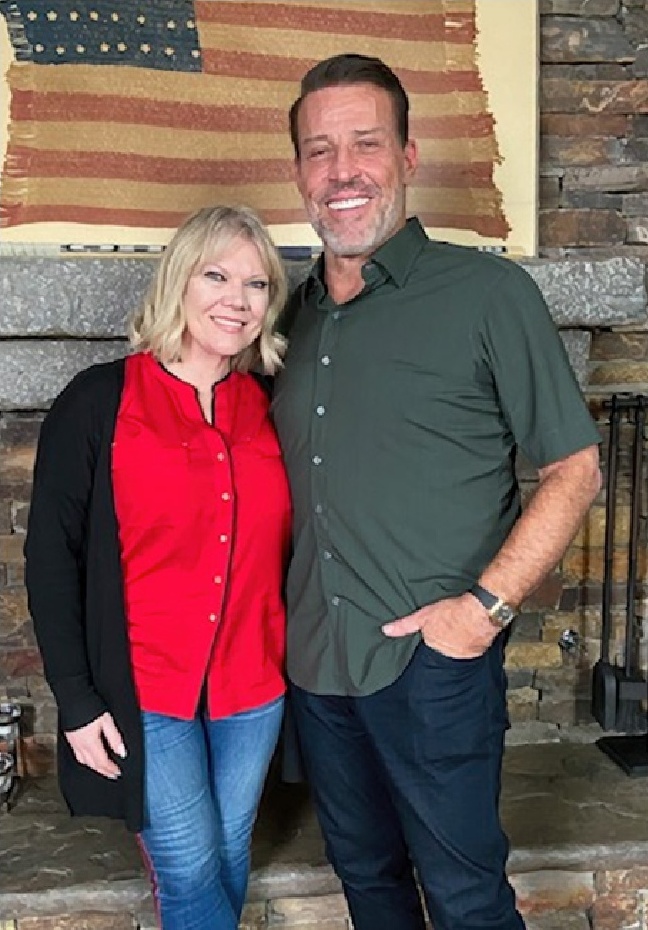
STAR POWER Kerrie on set with life and business strategist Tony Robbins.
Welcome to another inspiring edition of SUCCESS magazine, where we dive into the subject of financial prosperity and wealth-building strategies. We are honored to bring together some of the world’s top investment experts, who generously share their wisdom and insights. From time-tested strategies to cutting-edge approaches, these experts offer a roadmap for turning your financial goals into tangible, sustainable realities.
Throughout the creation of our Money issue, our team spent countless hours discussing the importance of money in our society. The common thread being that money in itself doesn’t guarantee happiness, but it serves as a powerful tool to craft a life of freedom and fulfillment. It’s the means to access experiences, support loved ones and pursue passions.
In other words, money isn’t the main source of joy in life; however, it does empower us to shape a life that aligns with our values and aspirations. This is why we are honored to include the maestro of money himself, Tony Robbins—the man who is renowned for his extensive knowledge and experience in guiding individuals toward financial mastery, wealth creation and a mindset of abundance.
Financial planning is a critical part of the process. In our new Mentor Message column on page 74, we explore the importance of making informed decisions and ensuring that your wealth management strategy aligns with your unique goals and aspirations. We also unveil the most lucrative celebrity franchises and share the top celebrity investments that have fortified their financial portfolios. So, whether you’re just starting your entrepreneurial journey or looking to elevate your existing financial plan, our pages are brimming with actionable advice to set you on the path to enduring prosperity.
As you navigate these pages, envision your financial future with clarity and confidence. Embrace the wealth of knowledge at your fingertips and use it as a catalyst for positive change. Your success story, both personally and professionally, is intricately connected to the choices you make today and tomorrow.
Here’s to unlocking new realms of financial possibility and sculpting a future where your wealth reflects the richness of your life. We hope this issue guides you on an empowering journey toward financial abundance in the future.
Sincerely,


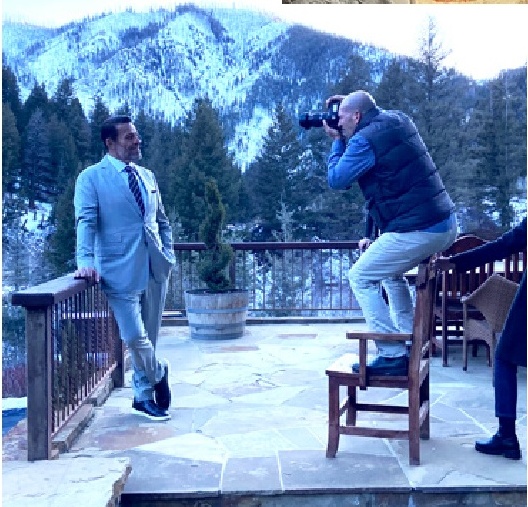

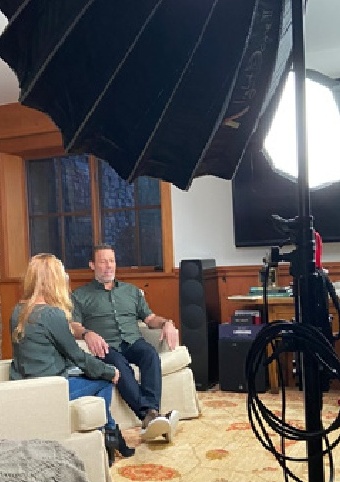
BEHIND THE SCENES
A glimpse into our photo shoot at Robbins' home in Idaho.




SOFT LAUNCH
Kathy Abbott
While in college, Kathy Abbott aimed to get a summer job at the Department of Public Works in Falmouth, Massachusetts. When the director of the department told her, “We only hire boys from the football team,” Abbott wasn’t deterred. In fact, the biting remark, coupled with her passion for environmental protection, fueled her ascension up the ranks to managing Massachusetts’ state parks and ultimately becoming the first president and CEO of Boston Harbor Now.
Read more online at SUCCESS.com
©ARLAN FONSECA FOR BOSTON HARBOR NOW/COURTESY OF KATHY ABBOTT
SOFT LAUNCH
New & Noteworthy

Interior view of the central office of I.M. Singer & Co., 458 Broadway, New York City
Franchising by the Numbers
HARKEN BACK TO THE MIDDLE AGES
As one of the largest franchise expos in the country, the annual International Franchise Expo will run from May 30 to June 1 at the Javits Center in New York. It seems like the perfect opportunity to take a franchising-by-the-numbers look at the industry and how it’s grown over the years.
FREE
The word “franchise” originates from the French verb franchir, meaning “to free.” According to the International Franchise Association, its roots can be found in the historical expansion of the church and as an early mechanism for central government regulation before the Middle Ages.
ONE
Many credit Isaac Singer as the first documented franchiser. Singer, who founded I.M. Singer & Company, marked one of the earliest instances of franchising in the United States when he introduced payment plans and licensing agreements in the 1850s to sell his sewing machines throughout the country.
200,000
The 1950s witnessed a remarkable surge in U.S. franchising. In a decade, the number of companies engaged in franchising soared from less than 100 to over 900. That represented roughly 200,000 franchised outlets in operation by 1960.
8.4 MILLION
According to the 2023 Franchising Economic Outlook, nearly 790,500 franchise establishments exist in the United States, supporting roughly 8.4 million direct jobs.
Fun Money Facts
ROLLING IN THE DOUGH
As one of the federal government’s oldest agencies, the U.S. Mint was established (via the Coinage Act) on April 2, 1792. The Mint currently operates production facilities in Denver, Colorado; Philadelphia, Pennsylvania; San Francisco, California; and West Point, New York, plus a bullion depository at Fort Knox, Kentucky.
Ready for some fun facts? Dive into this treasury of financial tidbits, courtesy of the Mint.

The Mint annually produces more than 10 billion circulating coins. It would take an estimated 317 years to count all 10 billion coins.

The life expectancy of a circulating coin stretches for 30 years, while paper money typically has a lifespan of 18 months.

Fort Knox Bullion Depository holds 147.3 million ounces of gold. The U.S. considers the gold, valued at $42.22 per ounce, an asset.
The Best Financial Podcasts
LISTEN UP!
Whether you need help budgeting, managing debt, saving for retirement or navigating your home purchase, there’s a podcast to guide the way. Take a cue from Investopedia, which lists the top 10 personal finance podcasts:
1 The Ramsey Show Dave Ramsey
2 The Clark Howard Podcast
3 Suze Orman’s Women and Money
4 So Money with Farnoosh Torabi
5 BiggerPockets Money Mindy Jensen and Scott Trench
6 Afford Anything Paula Pant
7 The Money Guy Show Brian Preston and Bo Hanson
8 Optimal Finance Daily Diania Merriam and Dan Weinberg
9 Money for the Rest of Us J. David Stein
10 Planet Money NPR

Redefining the Fitness Landscape
FRANCHISE SUPERSTAR
Orangetheory Fitness, founded in and franchised since 2010, has emerged as a notable franchise success story. The brainchild of Ellen Latham, a highly trained, Florida-based physiologist, Orangetheory uses a distinctive heart-rate-based group workout that combines science, technology and expert coaching to help members live a longer, more vibrant life.
Latham partnered with serial entrepreneur Dave Long, and they co-founded Orangetheory. Orangetheory Fitness has since expanded to over 1,500 operating studios worldwide in 50 states and 25 countries, establishing itself as a pioneering force in the fitness sector. The initial investment for prospective franchisees starts at $576,000, with a $59,950 franchise fee and an 8% royalty fee. The franchise’s remarkable growth and recognition in the industry highlight the effectiveness of its business model, which includes ongoing training and marketing, plus franchiser guidance on location, programming, operations, business plan and branding.
COURTESY OF LIBRARY OF CONGRESS; UNCLE LEO/SHUTTERSTOCK.COM; COURTESY OF ORANGETHEORY
SOFT LAUNCH | SUCCESS INTERVIEW

Millionaire Maker Rachel Rodgers
How to level up to seven figures even when the odds are against you.
I t’s hard to argue with Hello Seven’s mission statement: “We should all be millionaires.” With an emphasis on all.
It’s a solid plan, and one that the business coaching consultancy’s Rachel Rodgers is manifesting day in and day out. With all the talk about leaning into a career, Rodgers is teaching professionals how to lean into their worth. Especially groups such as women, people of color, LGBTQ+ people and people with disabilities. When it comes to earning six figures, men are earning those salaries more often than women. Only 6% of women earn six figures, compared to 13% of men, according to a 2019 YouGov survey of more than 2,000 people. For Black women and other people of color, the statistics are even worse.
Rodgers, CEO and founder of Hello Seven, is not just helping people make the most of their capacity for earning—she is leading the millionaire movement. It’s her mission to teach diverse entrepreneurs how to make more money and build real, life-changing wealth.
Never having to worry about money may be the most beneficial way to look at your own value. Because it’s not just about the luxury of indulgence—it’s about the luxury of security. There’s so much freedom in having that security. And it comes from having a clear-cut vision, determining what that vision will cost and assessing your existing skill set to help you navigate your way there.
SUCCESS: Before we talk about the origin of Hello Seven, what were you doing before you launched the business coaching firm?
Rachel Rodgers: I was a lawyer. I went to law school, and then I read The 4-Hour Workweek: Escape 9-5, Live Anywhere, and Join the New Rich by Tim Ferriss. It was all about, like, how to work online or start your own business and have flexibility. That sounded very appealing, because working at a law firm wasn’t what I thought it would be.

“WHEN I WASN’T WORKING WITH CLIENTS, I WAS DOING ALL OF THESE MARKETING ACTIVITIES. IT ALL STARTS TO COME TO A HEAD WHEN ALL OF YOUR EFFORTS START TO WORK TOGETHER.”
S: So, then, what kind of job did you land after law school?
RR: I was looking at different places to work, but this was during the 2008 recession, so there were more lawyers graduating than there were actual jobs. That led me to wanting to do my own thing. I had a clerkship lined up with a judge, and at the end of 2010, when my clerkship ended, I started my own law practice. I had a license to practice law, and I’d spent a lot of money to get it. I just asked myself, ‘How could I show up differently?’
S: The salary jump from law clerk to private practice lawyer had to be significant. And, then, from that to a seven-figure business. Was all of that more of a slow climb or overnight sensation?
RR: Definitely a slow climb, because I was figuring it out as I went. It’s not like I had a mentor. If I had had the me that I am now, it would’ve been faster…. I didn’t necessarily want to build a million-dollar business when I started. I just wanted to replace my $41,000 salary. My first year in my own law practice, I made $65,000. But by the end of 2013, I made $300,000. When I wasn’t working with clients, I was doing all of these marketing activities. It all starts to come to a head when all of your efforts start to work together.

“WE ALL HAVE SECRET SKILLS. YOUR RESUME SHOULDN’T BE ABOUT THE COMPANIES YOU WORKED FOR, BUT WHAT YOU DID WHILE YOU WERE THERE AND HOW YOU WERE AN ASSET TO THAT COMPANY.”
S: What was an important part of your marketing strategy?
RR: I created a product, and this was critical. I would talk to entrepreneurs all day long, but a lot of them could not afford me. A lot of them had lost their jobs because of the recession, so I still wanted to serve them but without working for free. So, I created a digital product that was a guide to running your business from a legal perspective. It was 10 chapters called Small Business Bodyguard. I launched that in July 2013… [and] earned $80,000. And, then, it just kept selling. I was earning a 90% profit every time it sold. The following year, I almost doubled revenue again. By the time I stopped practicing law, I was making around $700,000 a year.
S: So, you left the law behind for this new mentor role. How did you know it would be profitable?
RR: My legal clients were asking me how was I getting my practice to grow so fast. I didn’t even realize I was good at it…. And I wanted to share that with everyone who was asking, but then a mentor of mine told me to stop giving it away. I started charging for this business coaching side hustle, and my clients were very successful. Before I knew it, I was able to wind down my law practice and wind up my business coaching. I offered one-on-one coaching packages, retreats and events. I exhausted myself, though, and I realized I needed to streamline so that I was only offering a few services related to intellectual property.
S: At what point did you realize that it was women and people of color who were not getting to millionaire status as quickly as men?
RR: I was actually focused on the underserved category even in my law practice. So, I already knew that a lot of the people who were getting laid off were [white] women and women of color. And I remember coming across a stat that said that most women-owned businesses will never make more than $50,000 a year. I was horrified. I was like, “Oh, hell no.” When I watch women who have these brilliant and profitable ideas but can’t get anyone to give them a business loan, you see how there is just not as much available to them.
S: Is there a difference between making seven figures and actually being a millionaire?
RR: They are linked. If you have a business that generates a million dollars a year, even if you don’t take home a million dollars a year, you are a millionaire. The million dollars does not have to be liquid to count. If you have an asset worth a million or more, then you are very likely a millionaire.

©DALE MAY/ COURTESY OF RACHEL RODGERS

SOFT LAUNCH | LEADERSHIP

Building $10M+ Businesses
THREE ESSENTIAL LEADERSHIP HACKS FOR PEOPLE WHO WANT TO BUILD BIG.
I t takes a lot of work to start and grow a business. There are many moving parts and a never-ending to-do list. Business leaders are using today’s technology and access to consumers to build million-dollar businesses. With the advancements of AI and the internet, reaching consumers and showing them why they should do business with your company is more accessible.
As businesses are built, more logistical considerations are required to continue and sustain growth. (Many companies have failed due to rapid growth.) To reach the next level, a eight-figure, or more, business needs strong leadership.
Entrepreneurs know that leadership helps inspire employees in their respective capacities and promotes continued company growth and development. Building leadership into the fabric of a budding business is an essential strategy.
There are leadership hacks every business leader can use for company growth and expansion. Here are three strategies I’ve seen help businesses scale to $10 million-plus in revenue.
“WHILE GRIT, DETERMINATION AND A STRONG PRODUCT ARE ESSENTIAL TO BUILDING A MILLION-DOLLAR COMPANY, SCALING TO A MULTIMILLION-DOLLAR ENTERPRISE REQUIRES MASTERING A VITAL LEADERSHIP SKILL—HIRING, LEADING AND RETAINING THE RIGHT PEOPLE.”
1. SOLVE YOUR CONSUMERS’ PROBLEMS
As a leader, you’ll no doubt talk about yourself and the passion behind the business you started. Your personal brand can be the foundation from which you build your business. But at some point, your messaging will need to shift.
Consumers are looking for a solution to solve their problems. The branding and messaging that built your business will need to evolve to grow into a multimillion-dollar business. To reach eight figures, you’ll need to solve big problems for groups of consumers. Leading with a message focused on the consumer instead of yourself draws consumers to your business and makes them want to tell others.
One essential leadership hack is focusing your messaging on solving your consumers’—and employees’—problems. Influential leaders who build eight-figure businesses focus on being people-first leaders.
“For businesses aiming to scale to multimillion-dollar levels, a key strategy is identifying and solving problems. This approach establishes a strong market need and positions the business as a valuable contributor to societal progress,” says business leader and attorney Dionnie Wynter Pfunde, president & CEO of Wynter Immigration Law Academy.
“By focusing on problem-solving, businesses can develop unique, impactful solutions that resonate with customers and differentiate them from competitors,” Wynter Pfunde says. “This also opens partnership opportunities and enhances brand credibility and trust.”
2. BUILD A TEAM OF HIGH-PERFORMING LEADERS
As you grow a business, there are a lot of things you can do on your own; however, things will fall through the cracks as your time is stretched. There are million-dollar, one-person businesses, but you’ll need to hire a team to build a $10 million business.
Rapid growth means training others to be you when you can’t be in every place. You’ll need to develop a team of high-performing leaders capable of self-management, staying motivated and sharing your business’s vision. This team is as committed to their personal growth as they are to your company’s.
A business is a system of systems that an efficient team must manage. Trying to do it all alone will make you frustrated, burnt out and stressed to the point where you’ll get tempted to give it all up.
“While grit, determination and a strong product are essential to building a million-dollar company, scaling to a multimillion-dollar enterprise requires mastering a vital leadership skill—hiring, leading and retaining the right people,” says Jeff J Hunter, founder of VA Staffer. “At smaller scales, a founding leader can power growth through force of will and excellent execution alone. Sustaining rapid expansion demands delegating responsibilities to a capable team that shares the founder’s vision and values. Identifying, empowering and aligning a leadership team becomes critical.
“As the business enters exponential growth stages, assembling a leadership crew that clicks both personally and professionally goes from nice-to-have to need-to-have,” Hunter says. “Prioritizing team leadership enables founders to work on the business, rather than just in it—crafting vision, strategy and culture, while empowering others to execute tactically.”

3. LEVERAGE MENTORSHIP TO HANDLE AND SUSTAIN GROWTH
It’s hard to understand how to get somewhere you’ve never been. Growing a business to $10 million will require different skills, systems, leadership and other growth strategies you’re unfamiliar with if you haven’t reached that revenue level.
You’ll need a guide who has done what you’re hoping to do, and that’s where mentorship is essential. Mentorship, combined with powerful leadership, builds the type of companies we read about in the news every day.
Living in the digital information age means we can have convenient mentorship that will not impact our valuable time. Mentors can come in the form of coaches, training programs, or leadership and business growth courses.
Periods of rapid growth can crush businesses that are not prepared. Hiring outside mentors can help you quickly catch up to the rapid growth and put the proper measures in place to ensure the growth is manageable for your business.
“The right mentorship saves you time, effort and financial resources because you’re learning from someone already doing what you’re working hard to do,” says business leader Lori A. McNeil, founder of Lori McNeil International. “Mentorship done right saves you years of work and is a key to creating a multimillion-dollar business.
“Be sure to vet your mentors. Research what results they’ve gotten others and verify those results. Good mentorship aligned with the right timing can help you handle and sustain rapid business growth,” McNeil says.
LEADERSHIP HACKS BUILD STRONG BUSINESSES
Business leaders tend to think their next level of growth is more sales, funnels or tactics. Growth happens when leaders lead and retain intelligent people to help them. Warren Buffett had Charlie Munger, Steve Jobs had Tim Cook, and underneath them was a team of high performers who bought into these influential leaders’ visions. You can learn from their examples and use them to build your $10 million-plus business.
BIZVECTOR/SHUTTERSTOCK.COM
SOFT LAUNCH | ENTREPRENEUR
The Investor
BUSINESS COACH MELANIE TOWEY BELIEVES REAL SUCCESS REQUIRES AN INVESTMENT IN YOURSELF.
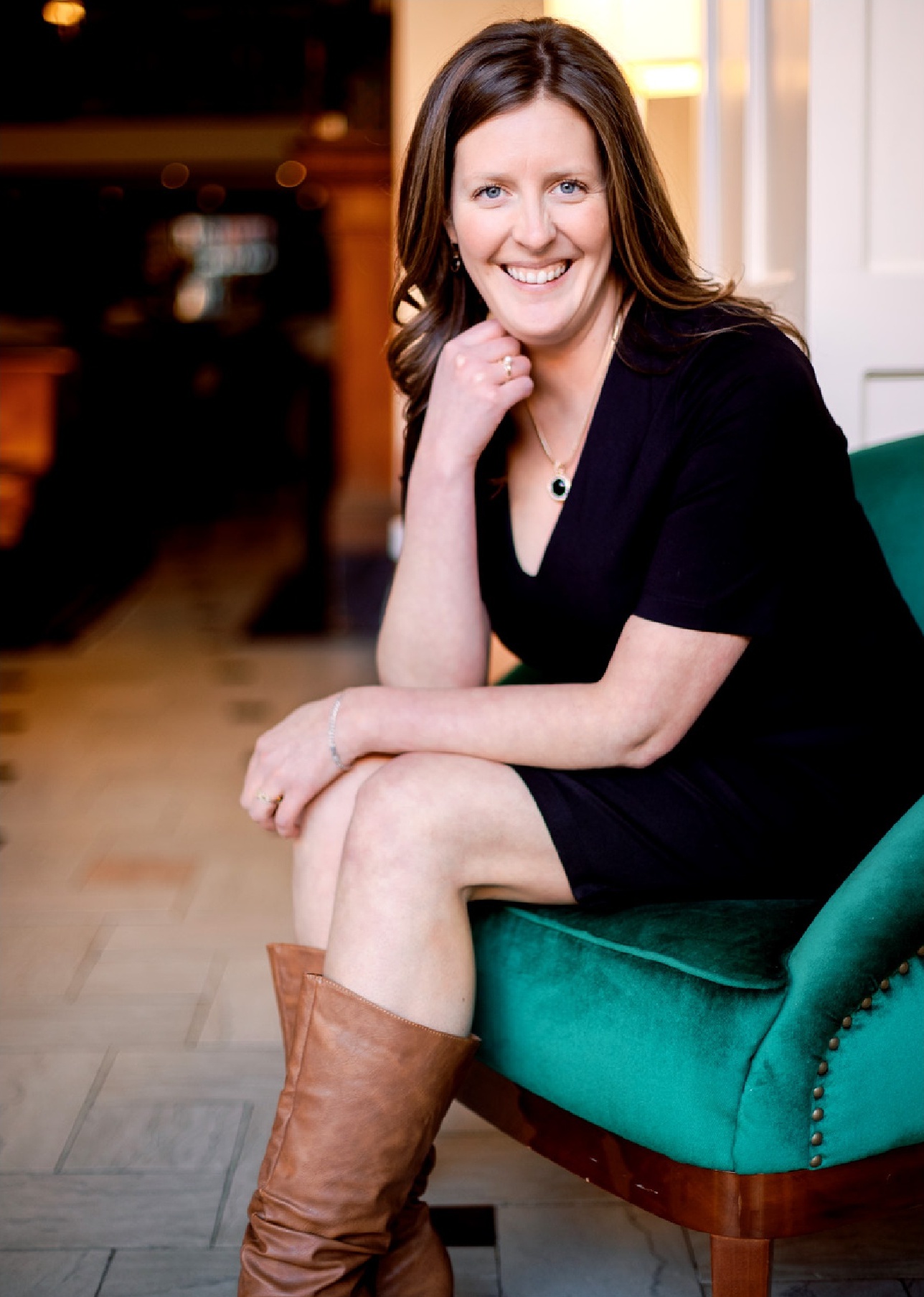
A s a certified EOS Implementer® and business coach, Melanie Towey wants you to unsubscribe from what you think you know about success. She wants you to be a little uncomfortable in going to a place of your own truth, not the truth set for you by society. This is what she asks of the women in her Denver-based networking happy hour group, UNSUBSCRIBE, and it’s what she asks of the leadership teams she helps become more functional and cohesive through the work she does in her own company. As someone familiar with asking hard questions and doing the work it takes to find the answers, she’s the ideal tour guide.
But when she started her career in the building materials and construction industry in 2012, Towey was asking questions focused more on “what’s next” rather than “what feels right?”
It makes sense, given that she hit the ground running as a marketing coordinator at a flooring company in Minneapolis with little chance to pause and reflect. When the company began building its first gallery nine months later, Towey asked for the management track.
She remembers thinking, “How hard can construction management be?’”
The answer hit her square on the hard hat at age 24, when she found herself on a construction site, never having read a blueprint before, leading the company’s first studio project—a multimillion-dollar build in downtown Minneapolis. Her success got her promoted to design and construction manager, where she oversaw the building of seven more projects.
When the company got too big for her liking, she transitioned to the sales department for a tile company, thinking things would be less frenetic. But she found herself leading two regions and supporting the company’s national sales strategy for 74 showrooms across the country.
“The wheels kind of came off of my life, personally,” she recalls. “I was doing 140 flights a year. I was never home…. I hadn’t dealt with any of my own stuff. I was really young…. By the time I was 27, [I was] managing 100 people…, and it was like, ‘If this is what success is, I’m out.’”
“IF YOU’RE A SMART PERSON, YOU KNOW YOU NEED TO GO TO THE PLACES THAT ARE HARD, AND, OFTENTIMES, WE NEED SOMEBODY TO HELP TAKE US ON THAT JOURNEY.”
She went to Denver to recalibrate near family and to do some soul-searching. She got her practitioner license in Rapid Transformational Therapy®, which utilizes hypnotherapy and other therapeutic modalities to reframe values, habits and emotions deep in the subconscious. “Once you can get through and access the subconscious mind, you can rewire your belief systems,” she says, adding that beliefs around worthiness and perfection can impede professional growth.
Her own belief systems were shifting so much that, by the time someone recommended she read Traction: Get a Grip on Your Business by Gino Wickman, she knew she found what she had been searching for her entire career. The book outlined Wickman’s Entrepreneurial Operating System (EOS), which, he says, “helps leaders run better businesses, get better control, have better life balance and gain more traction—with the entire organization advancing together as a healthy, functional and cohesive team.”
Without a plan in place of what was next, she resigned from her corporate job the night before her 31st birthday and never looked back. She began coaching individual clients before becoming a full-time EOS implementer in 2021. Today, she has a thriving practice supporting the leadership teams of companies that have between 10-250 employees, helping them define and execute their vision, share accountability, and ensure the team is cohesive and functional, so they can successfully implement the work.
“What [people] don’t see is everything that it took to get here,” she says, adding that being an entrepreneur is the hardest thing she has ever done.
The finances needed to start your own business, Towey says, can catch you off guard. After making good money in her corporate job and having no debt, she figured she’d be in great shape, but the results were not what she was expecting—including using up her savings and living in her parents’ basement for a couple of months.
Forging a new path meant she needed to develop trust with her audience. “My coaching is a big ticket and big client,” Towey says. “So, it’s not like you’re going out and people are like, ‘Oh, yeah, sure. I’ll sign up today.’ There’s a process of planting seeds to when you harvest that.”
Still, it was hard to wait for the seeds to grow into a tree, and she spent those early days feeling like she was going to fail.
Now that she’s on the other side, she recommends that entrepreneurs create a budget, determine how much they need to live on, then cushion the final numbers. “Give yourself an extra six to 12 months,” she says, reminding her fellow high achievers that most businesses take three to five years to get off the ground.
“WITHOUT THE UPS AND DOWNS…, THE SLEEPLESS NIGHTS AND BANK ACCOUNTS DOWN TO ZERO, HOW DO YOU TURN AROUND AND ASK SOMEBODY ELSE TO INVEST IN THEMSELVES AND TO HIRE YOU TO DO IT?”
Today, she counts herself lucky to be far off the ground, helping business owners and their teams get more of what they want out of their businesses and their lives. The trust extended to her has gone far, too, evidenced by the calls she gets from CEOs of billion-dollar companies, asking for her guidance.
“If you’re a smart person, you know you need to go to the places that are hard, and, oftentimes, we need somebody to help take us on that journey,” she says.
It’s a journey she knows she’d never be taking with her clients if she didn’t unsubscribe from her once-held definition of success, trusting that everything she did to get here would benefit them as much as it would her.
“Without the ups and downs…, the sleepless nights and bank accounts down to zero, how do you turn around and ask somebody else to invest in themselves and to hire you to do it?” she asks.
Once you truly invest in yourself and others believe in you enough to invest in your services, she says, “There isn’t a return out there that is as great as what you will get out of that.”
©FROM THE HIP PHOTO/COURTESY OF MELANIE TOWEY
SOFT LAUNCH | HOW TO
Agree to Agree
FOUR WAYS TO ETHICALLY OPTIMIZE YOUR NEGOTIATION TACTICS WITH EXPERT TODD CAMP.

T he word “negotiation” brings all sorts of different scenarios to mind—high-profit mergers and acquisitions, tense hostage situations, employment contracts and messy divorce proceedings, to name a few. Ultimately, the goal of these and any other negotiation is reaching an agreement, regardless of context. But despite what TV shows like Succession would have you believe, reaching that agreement doesn’t usually involve backstabbing, name-calling or other nefarious tactics.
For Camp Negotiation Systems co-owner and chief negotiation officer Todd Camp, negotiation is a family affair. His late father, Jim Camp, wrote the book Start with No: The Negotiating Tools That the Pros Don’t Want You to Know and founded the company that Todd and his brother, Jim Jr., now co-own. Jim Sr. tapped Todd as a contributor for his follow-up book, No: The Only Negotiating System You Need for Work and Home. The coaches at Camp help clients prepare for, execute and manage the nuanced and challenging conversations that occur during a negotiation using an ethical negotiation system. Among those clients are Fortune 500 executive teams, the FBI and many venture-backed startups.
Camp says there are four key ways individuals and organizations can optimize their negotiation tactics to reach their desired outcome ethically and more effectively. These four methods hold true whether you’re negotiating as part of a fundraising campaign, an acquisition, contracts with investors or board members, large commercial agreements and countless other scenarios.
“THE MINDSET SHIFT THAT WE ASK PEOPLE TO GO THROUGH IS TO BE COMFORTABLE FORGETTING ABOUT HOW YOU’VE NEGOTIATED IN THE PAST AND HOW YOU’VE PREVIOUSLY THOUGHT ABOUT IT.”
1. SHIFT YOUR MINDSET
Most people have detrimental mindsets that impede their ability to reach that outcome. Typically, they fall into two camps (no pun intended). The first believes that all negotiations require compromise. While compromise does happen, expecting to concede does a lot of harm, especially when negotiating against the second mindset—those who take a “by-any-means-necessary” approach. Using power and leverage to get everything they want, this type of negotiator is often aggressive, dishonest, contentious and, frankly, a bully. Again, think Succession.
Camp doesn’t believe in either of those styles. Compromise isn’t compulsory in a successful negotiation. He also coaches clients to act empathetically and demonstrate respect toward those they’re negotiating with.
“The mindset shift that we ask people to go through is to be comfortable forgetting about how you’ve negotiated in the past and how you’ve previously thought about it,” Camp says. “Be open-minded and coachable to a new way of thinking about it.”
2. TAKE ‘NO’ FOR AN ANSWER
Camp defines negotiation as an effort to bring about an agreement between two or more parties, with all parties having the right to veto—and that right to veto is critical. He coaches clients to not only get comfortable hearing “no” at the negotiation table but to welcome it. It signals that the other party feels safe to do so. More than that, hearing “no” makes you more apt to say it yourself.
“We look for a ‘no’ three or more times before it might be a good business decision to make a concession,” Camp continues. “Every time you hear ‘no,’ it’s important to find out what’s happening. Where’s that ‘no’ coming from? How are they able to make that decision? What don’t they see today that we need to help them see?”
“EVERY TIME YOU HEAR ‘NO,’ IT’S IMPORTANT TO FIND OUT WHAT’S HAPPENING. WHERE’S THAT ‘NO’ COMING FROM? HOW ARE THEY ABLE TO MAKE THAT DECISION? WHAT DON’T THEY SEE TODAY THAT WE NEED TO HELP THEM SEE?”
Camp says a “no” typically stems from one of four places:
They lack the emotional vision of the benefit of saying “yes.” If you don’t paint a clear enough picture and go straight to the price tag, that’s an easy way to lose a deal quickly.
They need more data. Data is important. Every decision people make is based on some combination of data and emotions. Presenting the right balance is critical to getting a “yes.”
They don’t have the authority to say “yes.” The person you’re negotiating with might not be able to say anything other than “no.” Negotiations are likely to stall if they aren’t the real decision-maker.
They’re using “no” as a tactic to drive concessions. That “no” is a bluff to force you to give up things you don’t need to.
3. KNOW WHAT YOU WANT
One of the most important things an organization can do to ensure a successful outcome is to negotiate amongst themselves first. If your team doesn’t have alignment on what it is you’re trying to achieve, you’re operating at a considerable disadvantage. But if everyone from the CEO to the company representatives at the table knows exactly what success looks like, it’s much easier to confidently ask for what you want until you hear a “yes.”
Camp acknowledges that negotiating with your boss or peers isn’t fun. But he says it’s important to have a “consult-and-then-decide” internal culture instead of “decide and tell people what we’re doing.” Team members deserve an opportunity to have a voice and provide their input.
“The other party is going to continue asking for things until they see you aren’t moving over multiple iterations,” he says. “You have to have a stomach for that. It’s uncomfortable because you don’t know what’s going to happen. But, usually, where we see the magic happen is when our teams can become 100% aligned and not move off what they’re asking for over a period of time.”

4. KNOW WHAT THEY WANT
Even more important than knowing what you want is knowing what the other party wants and how they want you to provide it. Determining that may seem daunting, but Camp says it all starts with a thesis of what you think they want. Then, it’s as simple as asking them to confirm your assumptions. The sooner both parties can get on the same page about what they’re each trying to achieve, the real negotiations can begin.
The advantage of understanding the other party’s desires ultimately makes it easier for you to ask what you want—and vice versa. When everyone in the room understands what’s at stake, you should feel more confident in asking for what you want, enabling you to give them what they need to get the deal done.
JOZEF MICIC/SHUTTERSTOCK.COM

SOFT LAUNCH | WELL-BEING
Prioritizing Yourself Is the Key to Success
NEGLECTING PERSONAL WELL-BEING CAN BECOME A SUBTLE ACT OF SELF-SABOTAGE, HINDERING PROGRESS TOWARD OUR GOALS.
S ometimes, it’s the most obvious thing that we miss. In pursuing success, we often forget to prioritize the most fundamental aspect—ourselves. Dr. Jude Emokpare, a physician and wellness advocate, believes that our mental well-being, physical well-being and productivity are three critical components we tend to deprioritize subconsciously. By doing so, Emokpare says we’re slowing progress toward our own goals.
PRIORITIZING MENTAL WELL-BEING
Mental well-being is our most critical component because it can lead directly to burnout when managed poorly, Emokpare says.
“There’s heightened anxiety. You have a decreased resilience when you’re faced with challenges,” Emokpare says. “It leads to stress, which accumulates and impairs your cognitive function and decision-making abilities. You don’t need to be a doctor, but everyone knows chronic stress has been linked to various mental health issues, including depression and anxiety, and, ultimately, these things will impede your ability to achieve your goals. So, prioritizing your mental health is the foundation, number one for success.”
With so much impact on our cognitive function and decision-making abilities, it’s hardly a surprise that the state of our mental health can trickle into every other area of our lives, damaging our relationships and our pursuit of greater goals.
“WHEN YOU’RE FOCUSED ON OTHER PEOPLE’S WELL-BEING AND PUT YOUR OWN PERSONAL HEALTH ASIDE, YOU BEGIN TO ADOPT UNHEALTHY HABITS.”
PRIORITIZING PHYSICAL HEALTH
Emokpare likens our bodies to physical vehicles propelling us toward success. Neglecting its maintenance can lead to breakdowns.
“I call this your catalyst for productivity,” Emokpare says. “And thinking of it this way, you’re on this journey to success, and the vehicle for you to get to your destination is your body.”
When your sleep quality is poor, your diet is poor. When you limit time to yourself because you’re prioritizing others, it ultimately results in poor work, Emokpare says.
“When you’re focused on other people’s well-being and put your own personal health aside, you begin to adopt unhealthy habits,” Emokpare says.
PRIORITIZING PRODUCTIVITY
Emokpare notes that people tend to focus on the quantity of work rather than the quality. We ignore breaks because it feels like a productivity boost to squeeze in a few extra hours of work per day. However, Emokpare says it’s essential to see things through the lens of longevity by creating an efficient work environment for sustainable productivity. By understanding ourselves, we can better guard our personal thresholds from outside distractions.
“Some people are morning people; some people are evening people,” he says, citing an example of someone who works best in blocks of uninterrupted time. For example, if you know you need four consecutive, concentrated hours to have a productive work session, by prioritizing that time, you’re able to be more efficient. On the contrary, when we deprioritize our productivity, we allow other things to dictate how we schedule our day.
“IF A YEAR FROM NOW I’M HOPING TO HAVE LOST 20 POUNDS, I START WITH THE PICTURE OF MYSELF 20 POUNDS LIGHTER A YEAR FROM NOW AND WORK MY WAY BACKWARD. WHAT DO I NEED TO DO TO GET TO THAT PERSON I SEE 12 MONTHS FROM NOW?”
STEPS TOWARD SELF-PRIORITIZATION
Getting Clear on Our Goals
Prioritizing ourselves and declining other requests requires a strong understanding of our own dreams and goals. If we aren’t clear with ourselves about why our goals are important to us, it becomes more challenging to say no to others’ requests and demands.
To find clarity on our goals and dreams, Emokpare suggests breaking them down into one-, three- and five-year goals and working backward.
“What am I hoping to achieve?” Emokpare asks. “If a year from now I’m hoping to have lost 20 pounds, I start with the picture of myself 20 pounds lighter a year from now and work my way backward. What do I need to do to get to that person I see 12 months from now?”
Three Tasks Per Day
Once goals are set, Emokpare likes to start each day by listing out three tasks to accomplish.
“Start with only three very simple things that you know, even on your worst day, you can easily achieve,” he explains. “It may be something as simple as drinking four bottles of water a day or walking 10 minutes. You don’t have to walk 30 minutes; start with 10 minutes.”
Breaking things down into something small and digestible creates long-term healthy habits because it allows you to build momentum, Emokpare says, explaining that it becomes an action of discipline you can feel successful about little by little.
Delayed Responses
Along the way, you’ll need to evaluate whether something aligns with your priorities. Emokpare suggests a tool for thoughtful decision-making: delayed response. Before committing to someone else, take time to check your schedule, evaluate the alignment of responsibilities with your priorities and avoid immediate answers. This can prevent overcommitting and help you maintain focus on your personal goals.
“I never answer right on the spot because there is that desire to want to help,” Emokpare says. However, that desire to help doesn’t always translate into a positive outcome. “At some point, you’re going to overwhelm yourself, where you take on too much, and then you’re going to disappoint people, including yourself. So, I always just start off saying, ‘I’ll be glad to help, but let me check my schedule first and get back to you.’ This gives me time to think it through as to what I am getting myself into. And then I go back to my day. What are those three things I said I need to achieve today? Is this person’s request going to interfere with it? If the answer is ‘yes,’ I take my time to focus on my priorities.”
Although it can feel intimidating to deprioritize others, it helps our personal goals and relationships in the long run. By clarifying our goals and prioritizing ourselves, we’re able to be more productive and show up more authentically for those we care about.
©REBECCA ENSLEIN @ WWW.THESTUDIOBPHOTOGRAPHYBLOG.COM
SOFT LAUNCH | TOP OF MIND
Financial Guidance
WHAT’S THE MOST IMPORTANT PIECE OF ADVICE YOU’VE RECEIVED ABOUT MONEY?

Are you an industry expert with a unique message? We want to hear from you. Please get in touch with us at speakers@success.com.
©JO ELLEN VERNA; COURTESY OF ANDRÉ EANES; ©JOHN T. BERRY

SOFT LAUNCH | MONEY

How Anne Mahlum Turned $175K Into Over $88 Million
MAHLUM TURNED DOWN INVESTMENTS WHEN SHE FIRST LAUNCHED SOLIDCORE, WORRIED IT WOULD BE A BET AGAINST HERSELF. HER SUBSTANTIAL PAYDAY PROVES SHE MADE THE RIGHT DECISION.
I f you learn one thing from Anne Mahlum’s eight-figure success, make it this: Your relationship with money could be holding back your business. If you have a scarcity mindset rather than trusting yourself to go out and make more funds when you need them, it’s going to be hard for you to scale up as an entrepreneur. Also, if you’re micromanaging your talent instead of trusting them, you’re wasting your time.
“Think about how you were spending your time six months ago,” Mahlum says. “If you’re trying to scale and you’re spending your time the exact same way, something’s wrong. You’re never going to get there.”
When Mahlum started Solidcore in 2013, which now has over 100 studios across the U.S., she had $175,000 in savings. And when she says she put all of it into the business, she really means all of it. She was adding up every expense and weighing where to splurge on a wise investment and where to save a few grand. For example, instead of paying $10,000 to have wood pallets installed as a studio wall backdrop, she ordered pallets from a website giving them away for free and persuaded her friends to help her sand them down for a DIY job.
“I literally felt like I had just enough money,” she says. “Between the machines I had to buy, the licensing agreement, the lease I had to sign, the security deposit, the construction build-out—I’m like, ‘This is everything, everything I’ve got.’”
Ultimately, it paid off. The first studio broke six figures of revenue in its first month, and she quickly started to scale. She sold many of her shares in the company for close to $90 million last year and is now considering her next venture.
To get the business where it is today, Mahlum frequently reevaluated how she was spending her money and time. In the early days, she enjoyed personally coaching classes, but she soon pivoted to hiring other instructors and negotiating with landlords who would accept higher rent in lieu of huge security deposits that would tie up capital.
Here are some of her biggest pieces of advice for scaling a small business into a full-blown national brand.
“IF YOU’RE TRYING TO SCALE AND YOU’RE SPENDING YOUR TIME THE EXACT SAME WAY, SOMETHING’S WRONG. YOU’RE NEVER GOING TO GET THERE.”
KNOW THE DIFFERENCE BETWEEN OVERSPENDING AND INVESTING
It’s important to figure out where to save and where to invest when it comes to talent. When Mahlum first launched Solidcore, she was so hands-on with the business that she personally taught classes. But, eventually, that wasn’t a smart use of her time, she says.
“I love coaching—don’t get me wrong—but there are other people who can do this just as good or better than I can, and frankly, I [needed] dozens and hundreds and now we need thousands of them,” she says. Figuring out that piece allowed the company to grow.
Today, the company has grown so much that it employs a full-time graphic designer. That never would have been a wise use of money when the brand was in its infancy and needed “amazing generalists,” she says.
DON’T HEDGE BETS AGAINST YOURSELF
Before Mahlum opened the first studio, a friend and colleague offered her a $75,000 investment for a 30% stake in the company. At first, it seemed like a good deal, as it would have given her a bit more wiggle room in the early days of the brand. But she realized that if she was already making a “just-in-case” fail-safe, she was investing in self-doubt rather than a successful venture.
“When anything goes wrong, I’m gonna start to actually put more quarters in that [self-doubt] jar because I’ve hedged my bets,” she says of her thinking at the time. “I’m actually not gonna be as determined or hungry to figure things out if I have this cushion.”

BE DIRECT WITH YOUR TEAM—EVEN WHEN IT’S BRUTALLY HONEST
Mahlum says she has often seen people second-guess their choices and ask for her approval when decision-making was an essential part of their jobs. But it’s crucial for employees at the highest levels to exert confidence in their decisions and not to constantly ask for approval to “protect” themselves in the event something goes wrong, Mahlum says.
“You have to stop coming to your supervisors for protection over decisions,” she says. “If I can’t see that you’re comfortable making decisions on your own at this level, you shouldn’t be a director.”
WRITE A LETTER TO YOUR MONEY
Mahlum recommends reading You Are a Badass at Making Money: Master the Mindset of Wealth by Jen Sincero. One of the exercises in the book is to write a letter to money. “It’s like, ‘Dear Money, I miss you,’” Mahlum says. “‘You never come around enough.’ Or like, ‘Dear Money, You make me feel bad about myself.’” It’s funny, but it’s also a clever way to evaluate your relationship with money and wealth. Mahlum recommends questioning why you want money. “Is it status? Is it freedom? Is it flexibility? Is it opportunity?”
Mahlum’s parents have polar opposite money habits. Her father gambled away their savings, while her mother has squirreled away her earnings but doesn’t feel comfortable spending what she has. Mahlum’s relationship with money has fluctuated accordingly. At 26, she was broke and needed to ask her mom for cash. Now, she’s among the world’s wealthiest women. But what she doesn’t want to do is hold steady and become too risk averse.
“I want to live a big, full exciting life,” she says. “And if I want to do that, I have to work on getting my life into abundance. I have to be generous; I need to spend—there needs to be balance there. I want a life of abundance, not scarcity.”
©VANESSAANDJOHNNY.COM/COURTESY OF ANNE MAHLUM
SOFT LAUNCH | A DAY IN THE LIFE

Lori Harder
IF YOU WANT TO BE A MILLIONAIRE, IT’S NOT ABOUT WHAT YOU KNOW. IT’S ABOUT ASKING THE RIGHT QUESTIONS.
S he’s a serial entrepreneur, podcast host and author. And she’s determined to get people who have the money and mission to make “big leaps” in their entrepreneurial dreams in the right room. Basically, Lori Harder’s exactly who you want to run into in an elevator if you have a big idea. But just a few decades ago, the multimillionaire was a high school dropout.
In the meantime, she helped her dad install bathroom fixtures, owned a gym, modeled, made coffee and even became a fitness world champion. She’s built an empire around herself and is coaching others to do the same. Here’s what a typical day looks like for the once financially struggling teen.
6 A.M. – READ
You won’t hear many entrepreneurs say they wake up and grab a book, but that’s what Harder does some mornings. (Harder published her own book, A Tribe Called Bliss: Break Through Superficial Friendships, Create Real Connections, Reach Your Highest Potential, in 2018.) Other times, she listens to lectures from people like author and motivational speaker Gabby Bernstein, who’s someone she’s “always loved.”
“I’m in a place in my business where I’m observing the fear of, ‘Is this going to go well? Is this launch going to go well?’” So, Bernstein’s app, The Universe Has Your Back, eases that fear in the mornings.
“I wanted that reminder of not to focus on what you’re afraid of but on all that could happen.”
6:30 A.M. – WALK
The “Power 9” is a verbal exercise Harder and her husband, Chris, practice on their morning walks. Here’s how they break it down: “Three gratitudes, three ‘excited-abouts,’ and three things we are manifesting,” and they end with a “wish well.” That part is a wish for someone else, such as a well-wish for someone struggling.
“I used to be really in my head all the time—really frantic, really anxious. I was always focusing on what I didn’t have, rather than what I had.” That scarcity mindset is far in her past now, from negative thoughts about not being smart enough to being too busy. Her husband helped her reframe her focus onto the positives.
Her two Sheepadoodle dogs, Bonkers and Bananas, accompany them. Lori and Chris often have epiphanies about what podcast topic they should use from their life for their next “He said, She said” episode.

“I USED TO BE REALLY IN MY HEAD ALL THE TIME—REALLY FRANTIC, REALLY ANXIOUS. I WAS ALWAYS FOCUSING ON WHAT I DIDN’T HAVE, RATHER THAN WHAT I HAD.”
10 A.M. – PODCAST
Harder has nearly 1,100 episodes on her podcast Earn Your Happy. But you might not find her planning and scheduling them months in advance. She and Chris sometimes chat 20 minutes beforehand about what they want to talk about together on the show. “We were just talking about how important it is to always focus on what you want and what you have… instead of what you don’t have in your business yet,” she says. They’ll text about the topic and head into the podcast recording ready to go, without any scripts, “because it’s relevant to our lives right now.”
She and Chris just launched The Dinner Series, three networking dinner events, where they plan to arm participants with questions in breakout sessions to help people get the answers they need for their business. It’s about “getting in the room” with the right people, a topic she podcasts about and is on a mission to teach others, so they can level up, too. One segment is on how to ask a question faster. “You don’t need all the backstory. You don’t need to ask five questions. You just need the one most pressing question for you right now.” When people don’t have those skills, she says, they “waste” opportunities because the people they need to ask have “one-question type of time.”

“YOU DON’T NEED ALL THE BACKSTORY. YOU DON’T NEED TO ASK FIVE QUESTIONS. YOU JUST NEED THE ONE MOST PRESSING QUESTION FOR YOU RIGHT NOW.”
NOON – ASKING QUESTIONS
“Who are you to think you can ever do this?” These are the thoughts the old Harder battled. They came up when she started to learn how to invest. When Harder started her company, she envisioned having women involved in her company. But she wanted to ensure they felt like they owned the company and were a part of it. “It was the idea of… only take on women investors and have them own it.” But she didn’t believe she could raise money. So, she found out how.
Harder has asked questions all the way to the top by “finding who’s doing what you want to do.” But those answers don’t come free. “For me, I’ve always bought into the room. I’ve always paid for my next level,” she says. This is how she battles her “old story.” “All our old stuff comes up whenever you go to do another big thing.” Instead of percolating on that, she asked, “Who do I know?” It’s the question she encourages others to ask all the time. “You have to have some skin in the game…. You have to put something on the line, and you have to show up for yourself and your business.”

“ALL OUR OLD STUFF COMES UP WHENEVER YOU GO TO DO ANOTHER BIG THING.”
2 P.M. – LUNCH AND LEARN
Harder heads to lunch with a “super successful” woman in an adjacent industry. They met at a female founder event and hit it off. “I was like, ‘I need to learn from this woman.’” Harder asks her questions, as she’s someone a few years ahead of Harder on a journey to success, Harder says. She helps others similarly, especially if they “show up in the rooms” where she’s teaching. It means they are ready to roll.
Harder tells her about her own “zones of genius” and asks about whether she has a CEO or stayed CEO, in addition to other company structure questions. (Harder’s zone is “eyeballs and enrolling people.”) Harder asks her to share launch numbers on campaigns similar to her own. “I don’t just set pie-in-the-sky goals…. I want to build this in a way that feels really smart. I’ll also ask her… what I’m not seeing.”
4 P.M. – PHOTO SHOOT
Harder participated in a photo shoot as part of a two-day campaign shoot for a skin care product she’s investing in, working on web content, social media, videos and helping the consumer understand the product. “[It] was really fun to work with other creative people [to learn] what the vision is and to get everybody’s ideas and watch it come to life.”
Harder knows it’s a “game changer, energetically,” to work outside of her house, so days like these are the best.
10 P.M. – WINS
At the end of the day, the Harders express three wins. “It makes us realize that, even on the hard days, there’s always good.”

THESE EVENTS WERE TAKEN FROM A TYPICAL DAY AND SOME ILLUSTRATE THE HIGHLIGHTS OF HARDER’S LIFE.
ALL IMAGES ARE COURTESY OF GIRL SQUAD/LORI HARDER
ALL IMAGES ARE COURTESY OF GIRL SQUAD/LORI HARDER
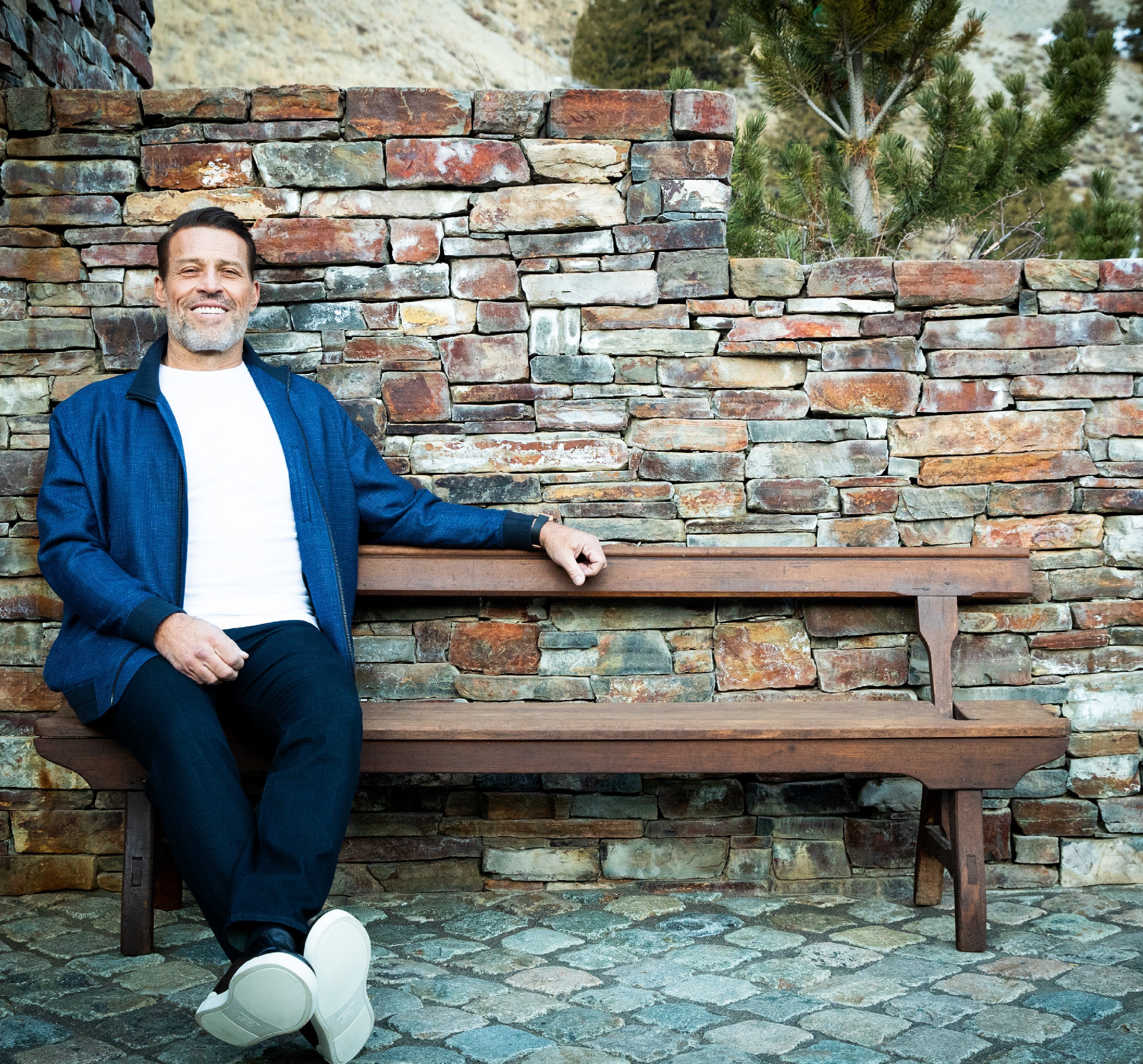
MONEY MAESTRO
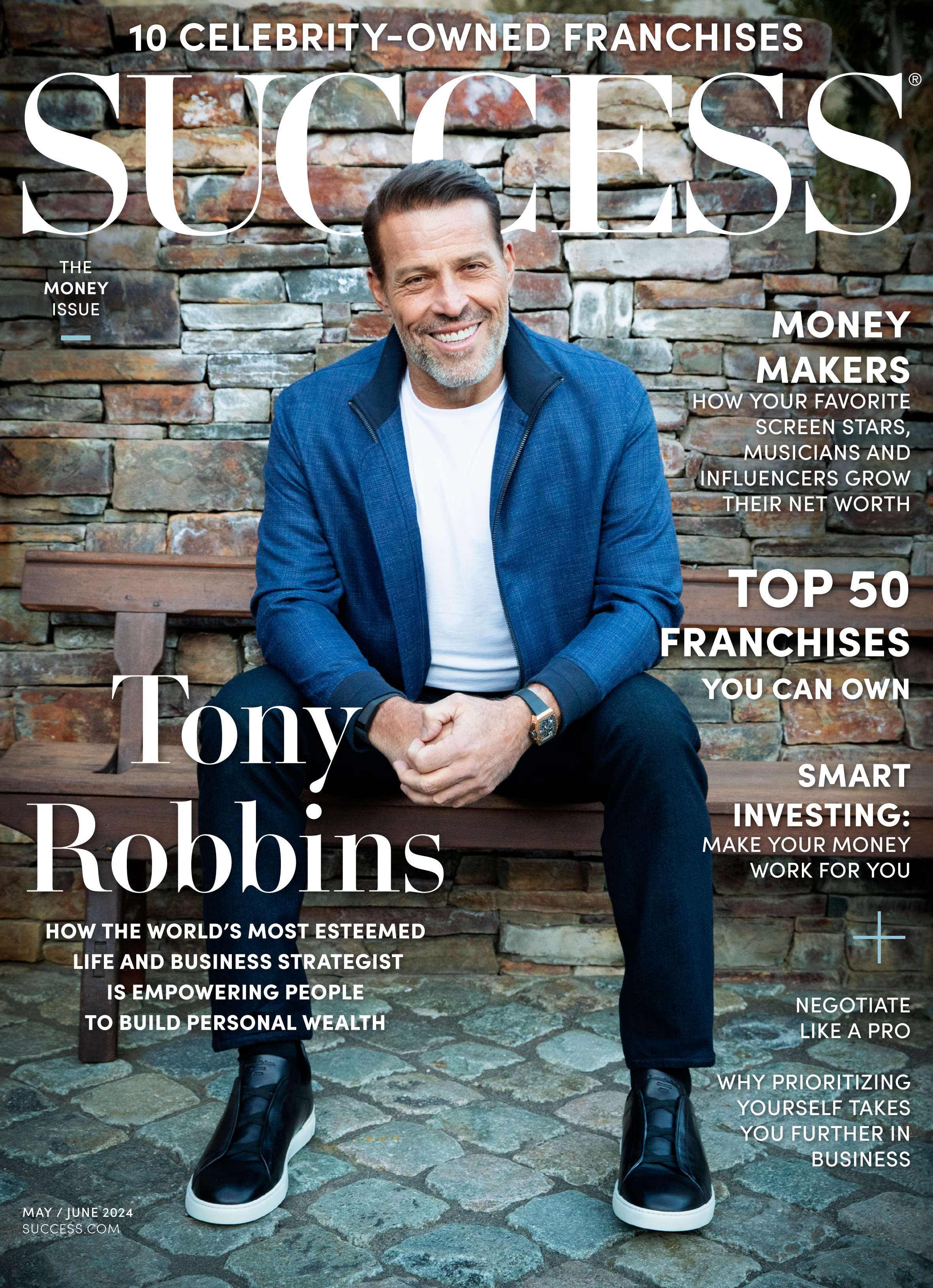
HOW THE WORLD’S MOST ESTEEMED LIFE STRATEGIST TONY ROBBINS IS HELPING PEOPLE MAKE MINDSET SHIFTS TO BUILD PERSONAL WEALTH.
W hen you hear the words financial abundance, few names resonate as powerfully as Tony Robbins.
Today, more than four decades after he began teaching people how to achieve personal fulfillment and obtain the lives they seek, the towering 64-year-old native Californian is known the world over for his many practical lessons on achieving personal prosperity, health and wealth. More than 100 million+ people across 193 countries, including world leaders, celebrities and financial titans—four U.S. presidents, Nelson Mandela, Princess Diana, Oprah Winfrey, Ray Dalio and Paul Tudor Jones to name a few—have benefited from his coaching wisdom.
It was quickly apparent during a recent conversation with Robbins why so many people from so many walks of life turn to him. His own life purpose is to help as many people as possible achieve an abundant life, no matter their current situation in the world.
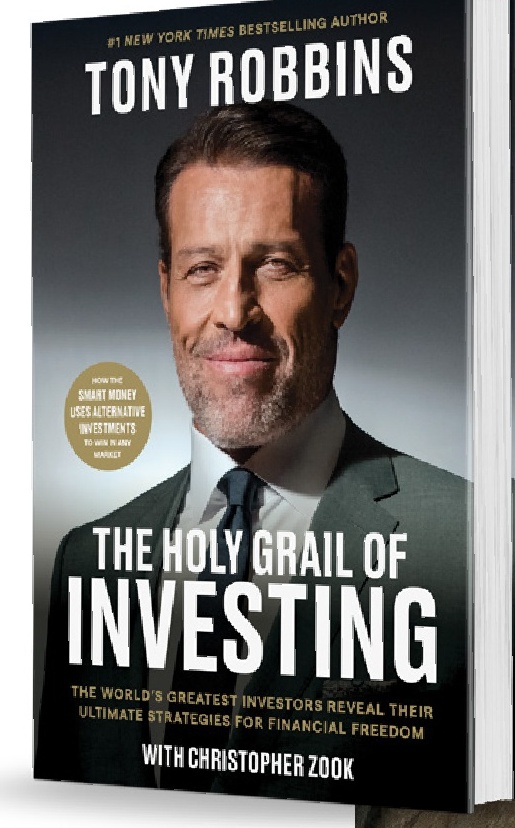
During the lengthy conversation, perfectly timed for SUCCESS’ first Money issue, Robbins doesn’t hesitate to discuss his own path to financial abundance and his investing practices, the latest lessons he has included in his just-released financial freedom book, The Holy Grail of Investing, which debuted in February 2024 at #1 on Amazon’s bestsellers list.
Robbins begins by passionately jumping right in to explain how simple personal mindset shifts stacked on top of one another over time can help build the life you want. When it comes specifically to building financial abundance through wealth building, Robbins emphasizes that 80% of wealth building is psychology, the other 20 percent is mechanics. First, to create financial abundance in your life, Robbins says one must remove their limiting beliefs about money. Money has no power by itself, only the power someone gives it. By understanding this, Robbins says individuals can transform their limiting beliefs to empowering beliefs around wealth building by adopting empowering beliefs like, “I deserve to make money” or “I will use the money I make to create a positive impact on the world.”
Robbins recalls growing up with nothing and scraping pennies together to buy his first suit. “My life has been a tumultuous lesson since day one,” Robbins says. “If my mom was the mother that I wish she was, I wouldn’t be the man I am today. We had no money, no food.”
His plethora of personal experiences—both positive and not—and resulting success stories from his own rags-to-riches life serve as understandable access points to help guide those seeking not just financial prosperity, but a fulfilling and purpose-driven life.
With as much enthusiasm today as when he made his first million dollars at age 24, Robbins has a natural ability to draw you into a conversation with an infectious energy. Although a serial entrepreneur since his teens, Robbins explains finding his own financial freedom did not come without setback. “My obsession [with entrepreneurship] started with finding a way to do more for others and taking calculated risks,” Robbins says. “However, my success has not been without a lot of blood, sweat and tears.”
After many years of success, and yes failure, Robbins today sits atop a phenomenal multibillion-dollar brand that includes live and virtual training programs and seminars, seven internationally bestselling books, more than 25 million social media followers and a successful podcast that reaches millions more. On top of this, the serial entrepreneur is involved in more than 100 other businesses and is involved with a global foundation to make a significant difference in the quality of life of people often forgotten.
Robbins is open and thankful for the financial abundance and success he has achieved over his lifetime. It is in this moment that you can appreciate his complete story and why he is adamant that financial abundance comes to those with a hunger for hard work, continuous learning and development, constantly adding more value to the next person, and a willingness to do well by also doing well for others.
“THE PROBLEM IS THAT MOST PEOPLE OPERATE AS FINANCIAL TRADERS, EXCHANGING THEIR TIME FOR MONEY; BUT WEALTH IS BUILT BY CREATING VALUE AND OWNING A PORTION OF SOMETHING SUBSTANTIAL.”
MINDSET SHIFTS FOR PERSONAL WEALTH BUILDING
Robbins has carved a niche for himself in the realm of wealth management, investing and entrepreneurship. The Holy Grail of Investing (2024) with co-author and renowned investor Christopher Zook is the third in a financial freedom trilogy that also includes the #1 New York Times bestsellers Money Master the Game: Seven Simple Steps to Financial Freedom (2014) and Unshakeable: Your Financial Freedom Playbook (2017).
At the core of Robbins’ wealth-building philosophy lies the transformative power of mindset shifts. He advocates that to be abundant you must transition from a consumer mindset to an owner mindset. “This is the only way you’re going to embrace the value of owning a stake in successful enterprises rather than merely consuming their products,” he says. “The problem is that most people operate as financial traders, exchanging their time for money; but wealth is built by creating value and owning a portion of something substantial.”
Luckily, Robbins is an expert at molding his lessons into digestible nuggets. Illustrating the power of compounding and the concept of making money while you sleep, Robbins shares the inspiring story of Theodore Johnson. A UPS employee who never earned more than $14,000 in a year, Johnson retired with a staggering $70 million. The secret to his success? Consistently investing 20% of his income in an investment account, allowing compounding to work its magic.
Robbins emphasizes that building wealth doesn’t require immense sums of money; rather, it necessitates compounding and time. The story of Johnson serves as a powerful example, challenging the conventional belief that significant income is a prerequisite for financial success. Ultimately, if he can do it, so can you.
BE AN OWNER, NOT A CONSUMER
One of Robbins’ most profound insights about reaching personal financial abundance is that people need to transition from mere consumers to owners.
Among the insights included in The Holy Grail of Investing is the investing and wealth-building counsel of more than a dozen of the world’s most successful investors who have been making outsized returns as “owners” in private equity, private credit, private real estate and venture capital for decades.
In speaking with these great investors and many others during the past 15 years, Robbins has identified the fundamental mindset shift that sets the foundation for building personal wealth—it’s the decision to become an owner, not merely a consumer. These financial titans interviewed by Robbins for his latest book are the owners of the firms who actually manage the private assets while also sharing in the revenue they generate. Looked at another way, Robbins says, you can buy a new Apple iPhone as a consumer, or you can buy Apple stock and become an owner and share in the profits of global iPhone sales.
In a society driven by consumption, where material possessions often define one’s identity, Robbins challenges individuals to break free from the consumer mentality that dominates society today. More than anything, Robbins and the investors he talked to in writing The Holy Grail of Investing recognize the significance of owning a piece of successful companies, shifting the focus from immediate gratification to long-term wealth creation.
He cautions against the notion that making more money equates to building wealth. Drawing examples from personal experiences and friends who have made a name for themselves in business, such as Mike Tyson and Richard Branson, Robbins stands true to his mantra that true wealth is generated through ownership, not income. “Richard Branson negotiated for a year and a half to get Boeing to finally agree he could buy all these planes, but only if after a year and a half, he didn’t make it. He could return the planes and no loss financially and no loss to his credit.”
When it comes to scaling your business, Robbins discusses the nuances of starting a business while maintaining a full-time job. “The importance of clarity regarding one’s passion and responsibilities is critical when considering the time and effort required for success.” Robbins and his wife Sage both exemplify this principle, each finding fulfillment in different ways—she in helping a few with a personal touch, and he in reaching millions through his business and philanthropic efforts.
PERSONAL DEVELOPMENT AND FINANCIAL SUCCESS
To this day, Robbins draws inspiration from a mentor from his youth, Jim Rohn, an Idaho farm boy who made it big as a motivational speaker and author by holding seminars across the country for 40 years. “Rohn taught me that working harder on oneself becomes a mantra for success above everything else. He emphasized the continuous pursuit of knowledge, skills and self-improvement—and this focus on personal growth positions individuals as valuable contributors in the marketplace.” In other words, becoming a creator of value is the key to earning more in the marketplace. “The intersection of personal and professional development is crucial for entrepreneurs and business leaders in order to create a synergy that propels them toward success.”
Robbins reveals a pivotal lesson he learned from Warren Buffett during an interview with the “Sage of Omaha” a decade ago for his book, Money: Master the Game. He recalls asking Buffett about the most crucial investment one could make, expecting a response related to stocks or companies. His profound answer shifted the paradigm. The most important investment, according to the legendary investor, is in oneself.
Buffett attributes his success not only to financial acumen but to the investment he made in communication skills, citing his attendance at Dale Carnegie’s course as a transformative experience. “His belief that enhancing one’s skills and abilities is an investment that lasts a lifetime, remains non-taxable and directly correlates with increased value,” Robbins says. “Buffett’s emphasis on continuous self-improvement is the basis of personal development, which is a theme that I passionately endorse.”
COMMUNICATION IS KEY
Robbins echoes Buffett’s sentiment that investing in oneself is the foundation for lasting success. By continuously developing interpersonal skills and abilities, individuals become more valuable contributors in their respective professional fields. Hence, obtaining the ability to make more money.
Robbins says the ability to articulate ideas and negotiate is a key factor in achieving success. Robbins shares Buffett’s insight that without refined communication skills, brilliant ideas may wither away. As a result, his perspective on building fundamental skills extends far beyond traditional financial investments.
Additionally, Robbins has found through experience and interactions with thousands of business owners that business itself is a spiritual game; and says that entrepreneurs should focus on impact rather than just monetary gain. “This mindset is crucial for sustained success.” Even during uncertain times like the COVID-19 pandemic, he offered free events to support communities—displaying his value creation commitment and teaching. “This is why I do what I do, but it’s also why I encourage entrepreneurs to focus on enhancing their mindset when seeking financial success.”
“A PERSON’S WILLINGNESS TO EMBRACE RISK IN PURSUIT OF PASSION, EVEN IN THE FACE OF POTENTIAL LOSSES, EPITOMIZES THE MINDSET SHIFT THAT I AM TALKING ABOUT.”
ENTREPRENEURSHIP AND RISK TOLERANCE
His many insights on the road to financial freedom aim to guide others in avoiding common pitfalls, providing a roadmap for investing and scaling businesses and maintaining a more modest approach to building wealth.
Robbins urges business owners to identify their true purpose and goals by understanding their business’s position in its lifecycle. He also advises that hiring the right talent is critical as you build and grow—and you should determine whether you need a long-term fit rather than short-term proficiency. “The importance of taking calculated risks in business is important to highlight the search for asymmetrical risk-reward scenarios,” Robbins says. “A person’s willingness to embrace risk in pursuit of passion, even in the face of potential losses, epitomizes the mindset shift that I am talking about.”
OVERCOMING CHALLENGES IN ACHIEVING PERSONAL WEALTH
Robbins admits that he has faced criticism on a national stage in the past, but he learned to push through the negativity and stand up for his methods in the face of skepticism. His inspiring words come from a place of vulnerability and facing challenges head-on. He’s not afraid to be honest and stresses that it’s the only way to push through setbacks and learn from your mistakes.
“The entrepreneurial trap is getting into business, having all these great goals and dreams, but not knowing how to run it,” he says. “That’s why I do things like Business Mastery, where I take people in a boot camp for five days or 10 days of my time there. I can turn any business from 30 to 130 percent. However, what people have to understand is that if you’re a leader, you have to solve problems, otherwise someone else is going to do it for you.”
Robbins encourages entrepreneurs to understand their innate wiring and motivations. He cautions against blindly succumbing to the allure of entrepreneurship without genuine passion and competence. For instance, Robbins categorizes individuals into three common patterns: the artist, manager leader and pure entrepreneur. Recognizing these patterns helps individuals align with roles that resonate with their natural tendencies and strengths.
He says self-awareness is important in pursuing any passion, noting for instance that “not everyone is suited for entrepreneurship.”
BEING SELF-EMPLOYED VS. BUSINESS OWNER
While self-employment may be a valid choice for some, Robbins warns of the burnout associated with being an operator in a growing business. He advocates for aspiring business owners to learn or partner with individuals possessing entrepreneurial or managerial leadership skills to build a business and foster sustainable growth.
When it comes to wagering whether an individual should quit a full-time job to pursue an entrepreneurial dream on making millions, Robbins recommends that you don’t put all your eggs in one basket. “I wouldn’t rely solely on passion without practical considerations when venturing into business,” Robbins says. “In all honesty, you shouldn’t jeopardize your financial stability or your family’s well-being in the pursuit of passion.
“Entrepreneurship is not about the end goal of achieving everything you want; it’s about setting goals and aspiring to reach them along the way but putting everything you have into the process,” he adds. “Entrepreneurship is not for the faint of heart.”
DIVERSIFICATION AND RISK MANAGEMENT STRATEGIES
Robbins’ investment philosophy centers around setting aside a portion of an individual’s income into an investment account. He highlights the importance of following the #1 rule of making money from investing which is first to not lose money. Asset allocation, Robbins shares, is the cornerstone of financial freedom and the creation of a “money machine.”
The Holy Grail of Investing book title comes from this notion. That Holy Grail was identified for Robbins during a conversation with his friend Ray Dalio, a self-made billionaire, investor and founder of the largest hedge fund in the world Bridgewater Associates.
Dalio’s Holy Grail principles on diversification stress the importance of finding 8 to 12 uncorrelated investments to reduce risk and enhance potential returns. Without proper asset allocation beyond a traditional portfolio of stocks and bonds, various challenges can arise due to insufficient diversification in their portfolios. Proper investment and asset diversification allow the best investors to make money even in down economic times because of such diversification across multiple asset classes, Robbins says.
PRIVATE EQUITY AND INVESTMENT OPPORTUNITIES
When it comes to diversifying your investments, Robbins says the investment return disparity between publicly traded companies and one in the private market underscores the potential opportunities available in private equity investing. Robbins notes between 1986 and 2023, private equity as an asset class outperformed the S&P 500 by more than five percentage points annually (14.28% compared to 9.2%). He added that 87% of U.S. companies with more than $100 million in annual revenue remain privately held while the number of publicly traded companies on U.S. exchanges has fallen from more than 8,000 in 1996 to less than 5,725 today.
Robbins says resilience in down markets and quick buy-and-sell capabilities contribute to the allure of private equity for savvy investors.
While access to some private equity and private market opportunities may be limited, the U.S. Congress and regulators are currently in the process of revising “accredited investor” rules to expand access to more people in the near future.
Robbins himself holds stakes in sixty-five private equity opportunities that are generating substantial cash flow and growth to his portfolio. He also says private credit investing is another avenue to expand and diversify your asset portfolio as an individual and business. “The evolution of private credit as a financing option for businesses, especially in a tightening regulatory environment,” Robbins says, “adds a layer of complexity to investment strategies.”
Similarly, Robbins champions diversified investment portfolios to safeguard financial stability in the face of potential business failures.
The self-proclaimed business and life strategist is involved with more than 100 privately held businesses in his investment portfolio that combined produce sales exceeding $7 billion a year. Among them is Namale, a tropical resort in Fiji and investments in a range of private equity funds that are part owners of the Boston Red Sox, the Los Angeles Dodgers, the Golden State Warriors and other professional sports teams.
WHY SPORTS TEAMS?
Robbins says sports teams provide lots of revenue streams. “Sports is not just butts in the seats anymore,” he says. “Investing in sports teams also offers uncorrelated returns to other more traditional investments like stocks and bonds—and not many people know that owning a smaller stake in MLB, NHL, NBA and MLS professional sports teams is even a possibility.” Robbins applauds his friend and Hollywood filmmaker Peter Guber, who is also a master investor and executive chairman of the Golden State Warriors, for his financial innovation and ability to sustain substantial profits through asset allocation and diversification.
According to The Holy Grail of Investing, between 2002 and 2021, the average price for an NBA franchise rose 1,057% compared to the 458% the S&P 500 stock market index rose during the same period.
UNLEASHING A WEALTH MINDSET
As our time together comes to an end, Robbins shifts gears and explains that making money is above all a “spiritual game” because the only way it can grow is by doing more for others than anybody else. Then, he pauses for a moment and smiles as though we have opened Pandora’s box. And he shifts and pushes questions back at me: “Do you want to know how to make your money last?” Of course, I say. He responds, “Legacy planning. Training family members to become value creators is vital for long-term wealth preservation.”
With five kids and five grandkids, plus 14 thriving businesses, Robbins makes no qualms about sharing his secret to success with anyone who wonders. “If there’s one thing that I want people to understand it’s that there are two worlds you must master to be successful. The external world you can’t control, but you can influence, and the internal world you can work at and make progress.”
And with that, I can’t help but feel awakened to raise my standards and embrace the countless opportunities of stepping into my true self with abundance of all kinds being top of mind.

What’s Your Money Up To?
INVESTING HAS CHANGED—A LOT. HERE’S WHAT THE EXPERTS HAVE TO SAY ABOUT MAKING YOUR MONEY WORK FOR YOU.

Nothing ages like a good bourbon—except for a good investment. Now, you can have both at the same time.
CaskX, which launched in 2020, is one of many new opportunities that embody how the face of investing has changed over time. The company offers investors a smooth way to grow their net worth by buying scotch and bourbon barrels directly from distilleries, letting them age and then selling them to buyers who don’t have the time to age their own products.
“It’s one of the few investments that has historically gone up in value regardless of market conditions,” says Jeremy Kasler, the company’s founder and CEO. Although millennials and Gen Zers are drinking less these days than their predecessors, people who are drinking are spending more on higher-quality products, he says. Generally, investors can expect to double their investments within about five years. But the longer they hold them, the more valuable they’ll be.

The trick for distilleries, though, is that most don’t have the time or capacity to hold onto their barrels for three, six, or 12 or more years. That’s where CaskX comes in as a neat middleman for distilleries in Scotland and the U.S. The company can facilitate product tastings to match investors with distilleries they trust to produce a good spirit. Then, CaskX takes care of the storage of the barrels until a buyer is found. They take a portion of the sales as a fee.
“We don’t just pitch the whiskey; we pitch the people behind it,” Kasler says.
But CaskX is just one of the ways investing has gotten more personal over the past few years, as people have expressed more interest in investing in their interests and values rather than simple index funds. Even when it comes to more traditional stock investing, people want customized portfolios more than ever, says Dana D’Auria, co-chief investment officer and group president of Envestnet, which offers wealth management technology for financial advisers and enables them to customize portfolios more easily.
Just getting started with investing, or think it’s time to restructure? Here’s what to consider, according to D’Auria and Josh Crawford, vice president of training and development for Matson Money, which offers education for individuals and financial advisers.

We don’t just pitch the whiskey; we pitch the people behind it.”
Know Your ‘Why’ Before You Start Moving Your Money
If you’re new to investing or considering a big change, take a moment to define why you’re investing before you get too deep, Crawford suggests. Matson Money specializes in investor education and offers a conference called the American Dream Experience to help people understand how to put their money to work for them. One of the first things they do is get people focused on their purpose.
Sure, making lots of money may sound great, but what are you going to do with it once you have it? Without a plan for that money, you may find it harder to work toward the goal or see it as a precious asset that isn’t worth risking. Similarly, you might also find it too hard or too easy to spend that money once you have it if it’s not earmarked for something specific.
“Once you have a purpose, it’s like, ‘OK, now I don’t want to gamble my money because I have a purpose for my money,’” Crawford says. “[Maybe] my purpose is that I want to live an adventurous life and leave a legacy. OK, great. Let’s not get on Robinhood and gamble that.”

Investing is not a get-rich-quick game. It’s a game that requires prudence and discipline over a lifetime.”
Be Wary—People Are Making More Mistakes Than Ever
The advent of apps like Robinhood and Stash allow people to buy and sell fractional shares in virtually any amount. While these commission-free platforms democratize investing, allowing people to take their finances into the palms of their own hands, they also make it easier for people to lose, and to lose big, when they make a bad bet.
People clearly want more customization of their portfolios than ever before, but D’Auria says it’s hard to say whether putting investing directly in the hands of individual investors has been a boon or a bust. Sometimes, it works out great. Other times, apps like Robinhood enable people to engage in a “modern-day pump and dump” with meme stocks, like we saw with GameStop in 2021.
“There are more ways for people to make mistakes with their money now than ever before,” Crawford says. “I am very cautious when it comes to all these new apps, like Robinhood. … I think it confuses gambling with investing, and those are two completely different worlds for us.”
Crawford cautions prospective investors against picking individual stocks, timing the market or trying to predict which way it will go.
“Beware of anything that feels like betting,” he says, likening Robinhood to gambling and betting platforms like FanDuel. “If you do have the apps and it feels like you’re sports betting, that should be a red flag. Investing is not a get-rich-quick game. It’s a game that requires prudence and discipline over a lifetime.”
Think Differently About Going Green
Crawford and D’Auria shared differing perspectives about trying to be ethical within your portfolio. Crawford says he thinks it’s not possible to “keep your hands clean” because everything is connected. Even the greenest companies employ people who drive cars to get to the office, he said, and they still use paper and electricity.
“Rather than basing your investment strategy off of your values, what we find is a better way to do it is to engineer a portfolio that can maximize your rate of return, and then with the returns that you get, give back to causes that you care about,” he says.
D’Auria approaches the question differently. The data is clear that your returns will go down if you simply remove “sin” stocks like alcohol and tobacco or if you try to divest from oil companies hurting the environment, she said. But the jury is still out on whether structuring your portfolio around highly sustainable companies may be a better long-term bet. If you focus on companies with environmental, social and governance initiatives, known as ESG, you could potentially come out on top in the long run, she said.
Companies with good governance may not have the sorts of management scandals that can tank an asset, and companies that are planning for a net-zero future may outlast those that can’t adapt to environmental challenges.

Get Started Right Now
If you’re sitting on a pile of cash or if you have significant investment in just a couple of assets, Crawford and D’Auria agree that it’s worth taking some time immediately to address that.
“The first step is to diversify,” D’Auria said. If you’re interested in focusing your portfolio on ESG companies, she recommends exploring thematic exchange-traded funds, which allow you to invest in a collection of companies sharing similar qualities. She also suggests thinking carefully about how you approach new asset classes, like cryptocurrency. Crypto is such a big asset class now that you shouldn’t ignore it, she said, but you have to be aware that it’s volatile and essentially a speculative gamble.
“Adding even a little sliver can increase the volatility of a portfolio,” she said. She recommends finding an adviser if you have more than $100,000 to manage and to be prudent about new asset classes.
If you’ve been investing on your own, take steps now to examine your portfolio, get educated to improve your financial literacy and make sure you’re on (relatively) solid footing, Crawford says.
“I would start with putting together a globally-diversified mix of assets,” he says. Invest in index funds that capture the global market, then find someone who can educate you.
“Our financial future is one of the most important areas of our life, and very few people spend a meaningful amount of time sorting out, ‘Am I doing the right thing?’” he adds.
Ultimately, it boils down to a simple question he asks investors: When’s the best time to be prudent with your money?
“It’s now.”
COURTESY OF CASKX; RUSLAN IVANTSOV/SHUTTERSTOCK.COM; SIRTRAVELALOT/SHUTTERSTOCK.COM; MVELISHCHUK/SHUTTERSTOCK.COM; ANDY DEAN PHOTOGRAPHY/SHUTTERSTOCK.COM; ROBYN MACKENZIE/SHUTTERSTOCK.COM

THE FRANCHISE ADVANTAGE
HOW WEALTHABILITY® NAVIGATED TRANSITIONING TO A FRANCHISE MODEL AND WHAT LIES AHEAD.
MOST PEOPLE HATE TAXES.
Sales tax. Income tax. Employment tax. Property tax. Every day, these and a host of other taxes are sucking money from hardworking people. In fact, the average person in a developed country spends 25%-35% of their lifetime working to pay taxes. Add in how stressful it can be to pay some of these taxes, and it’s easy to understand the loathing.
On the other hand, I love taxes. Ever since I was a kid working in the accounting department of my father’s printing company, I’ve found them fascinating. As I built my career, first at some of the world’s biggest accounting firms and later as an entrepreneurial owner of my own CPA practice, I became an expert in tax law. More importantly for my clients, I became an expert in how anyone can use the tax law to permanently lower their taxes. I found a way to make taxes fun, easy and understandable. Many of my clients have been able to legally reduce their taxes to zero even as they’ve continued to grow their wealth.
“We believe everyone deserves to be financially independent of employers, Wall Street and the government.”
In 2018, I set out to share this knowledge more widely. I was already doing a fair amount of public speaking and had written my first book, Tax-Free Wealth: How to Build Massive Wealth by Permanently Lowering Your Taxes, so I launched the financial education company WealthAbility®. We adopted a declaration of financial independence as our bold mission: “We believe everyone deserves to be financially independent of employers, Wall Street and the government. WealthAbility® is dedicated to providing access to the tools, education and teams that will enable all people worldwide to create their own financial independence.”
The company has grown quickly. In 2021, WealthAbility® made the Inc. 5000 list of the nation’s fastest-growing companies, and it’s remained there ever since. Part of that growth included creating a network of CPA firms that helped clients implement their wealth and tax strategies. Over time, the CPA firms that were part of our network expressed a desire to do even more with the WealthAbility® systems. They wanted to share in our brand, and we wanted to give them more so that, together, we can create even better outcomes for the entrepreneurs and investors who are our clients. This mutual desire led to an exciting pivot: transforming our network into a franchise model.
INTRODUCING THE WEALTHABILITY® FRANCHISE
WealthAbility® is believed to be the first wealth and tax advisory franchise in the world.
Franchisees have access to all of the WealthAbility® systems we’ve developed over the years for creating wealth and tax strategies for entrepreneurs and investors that permanently reduce their taxes even as they make more money. These owner-operators get to use our proprietary software and participate in our training programs. Soon, they will have access to the WealthAbility® national tax office. WealthAbility® offers support with hiring, provides national marketing and helps franchisees create a name for themselves in their local market. On the sales side, we don’t just pass along leads; we offer comprehensive sales assistance for all new and prospective clients, ensuring that leads turn into customers.
It’s a turnkey franchise—an equity-building asset with no royalties for existing clients and no annual membership fees.
FRANCHISING 101: LESSONS FROM THE LAUNCH
We didn’t decide to franchise lightly. We conducted a thorough analysis of the business, including the growth potential of our brand, the scalability of our business model and the feasibility of replicating our unique value proposition across multiple locations.
Once we decided it was go time, we enlisted the help of Rick Grossmann, a seasoned franchise development consultant and the co-author of Franchise Bible: How to Buy a Franchise or Franchise Your Own Business. Grossmann has been franchising companies, including his own, for about 30 years. The first lesson we learned in this process was the importance of having the right coach. With Grossmann’s guidance, we are confident we have the strongest-possible internal systems and company to serve our franchisees.
Finally, we learned firsthand the value of having great existing relationships. Before we started marketing the WealthAbility® franchise opportunity, we reached out to our current network members—CPAs we’d personally worked with for years. They were a big part of why we went the franchising route, and we hoped they would be as excited as we were.
Having those established relationships allowed us to have one of the fastest launches Grossmann said he’s ever seen.
WHAT’S NEXT FOR WEALTHABILITY®
Our vision is ambitious. I expect WealthAbility® to grow to 10,000 franchisees worldwide over the next 10 years, including the U.S., Canada, Mexico, the U.K. and beyond. We see global demand for our services and are committed to building a scalable organization to meet this demand.
The CPA market is large, fractionalized and consolidating. At the same time, the need for high-quality wealth and tax strategy has never been greater. This creates a huge opportunity for young, ambitious entrepreneurs to join the industry, backed by a brand with a world-class reputation and with all the systems and support they need to own their own successful business from the get-go.
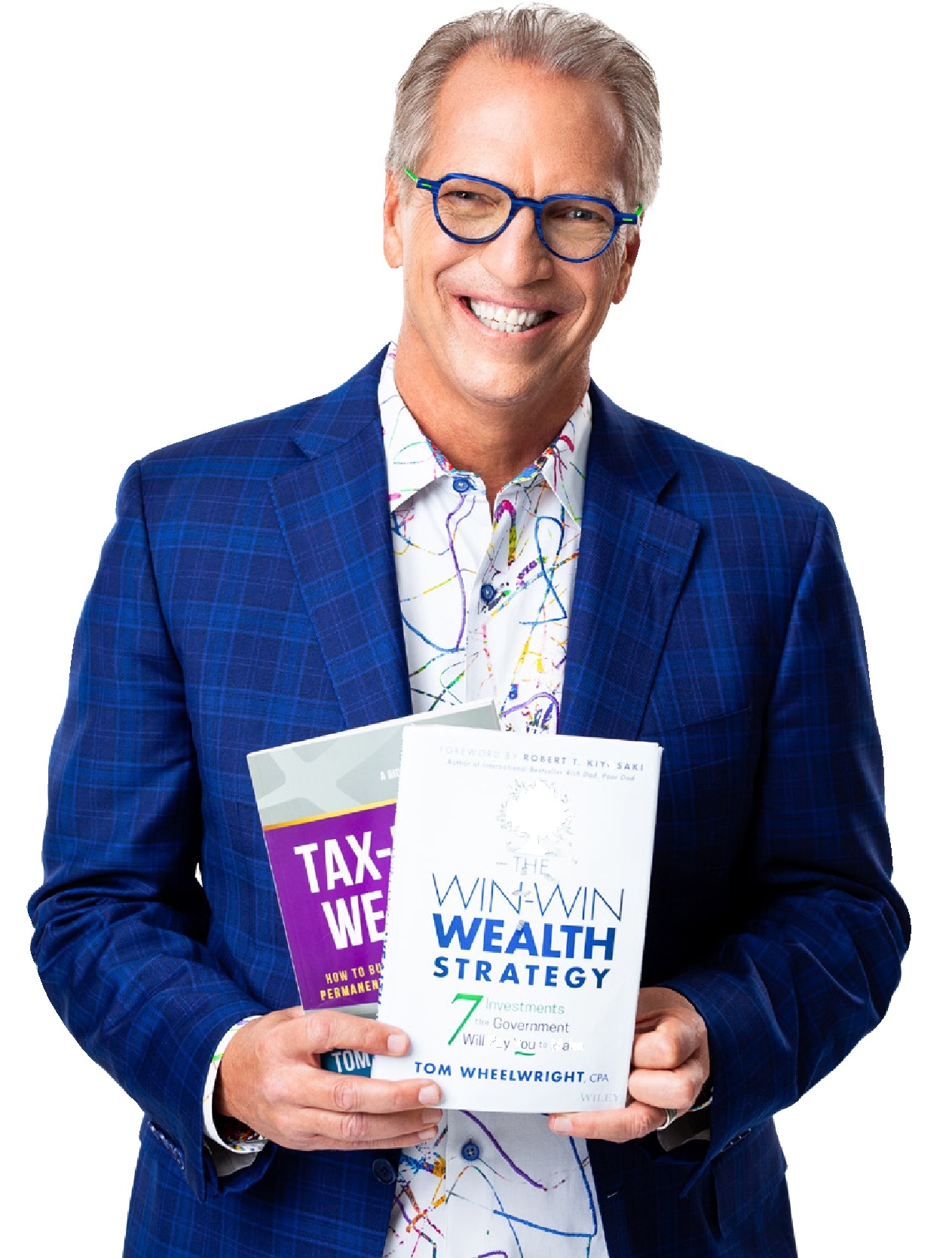
SIMONE GOLOB/SHUTTERSTOCK.COM; ©SCOTT FOUST/COURTESY OF TOM WHEELWRIGHT

TOP 10 CELEBRITY FRANCHISE OWNERS
THESE SUPERSTARS KNOW HOW TO WIN OUTSIDE THE LIMELIGHT, TOO.
W hile celebrities might rake in millions from their “day jobs,” they’re also boosting their net worth through smart investments, endorsement deals and entrepreneurship. And, when it comes to creating wealth, diversifying financial portfolios and expanding their business, franchises emerge as a powerful asset, drawing high-profile figures like athletes, actors, singers and other celebrities into this profitable business model.
Which celebrities showcase their business acumen as franchise owners and investors? Take a look at these business-savvy celebs.

Patrick Mahomes
The Kansas City Chiefs quarterback tastes victory both on and off the field. Mahomes not only holds the NFL’s largest-ever contract (a $450 million extension in 2020) but he also owns a stake in the Texas-based Whataburger franchise. The franchise, which averages an estimated $3.2 million in revenue at each location, plans to open 30 locations throughout the next few years in Missouri and Kansas. In 2020, Mahomes also bought a minority stake in the Kansas City Royals sports franchise.

Rick Ross
As the founder of Maybach Music Group, Ross doesn’t miss a beat when it comes to franchise investments. The rapper owns nearly 30 Wingstop restaurants. According to Ross, the franchises generate roughly $7 million for him annually. The franchise’s profitability might explain why he gave one of his Wingstop locations to his son as a gift for his 16th birthday.
Magic Johnson
Since earning over $100 million (when adjusted for inflation) as an NBA superstar, Johnson has developed into an astute investor, building a net worth of roughly $1.2 billion. As of 2022, the former Los Angeles Lakers star owned several TGI Fridays franchise locations and several Starbucks coffee shops. Going back to his athletic roots, Johnson also holds ownership interests in multiple sports franchises, including the Washington Commanders (NFL), the Los Angeles Dodgers (MLB), the Los Angeles Sparks (WNBA) and the Los Angeles Football Club (MLS).
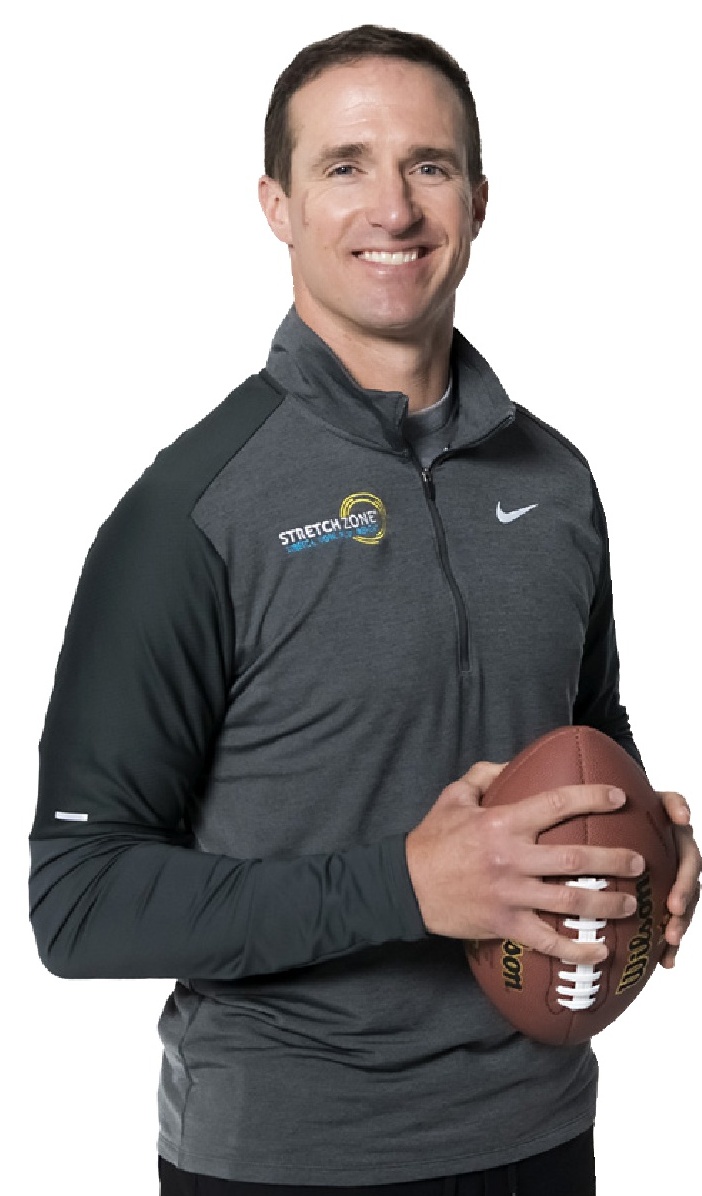
Drew Brees
The former NFL quarterback scored a touchdown in retirement with his investment in multiple franchises. With a reported net worth of about $160 million, the retired New Orleans Saints star invested in the fitness-focused Stretch Zone, the healthy-foods-focused everbowl, Dunkin’, Happy’s Irish Pub and Walk-On’s Sports Bistreaux.

Mark Wahlberg
Proving himself a success both on- and off-screen, Wahlberg owns or invests in a variety of businesses ranging from apparel and food to car dealerships and fitness. Perhaps Wahlberg’s most famous venture is the Wahlburgers franchise he and his brothers founded in 2011. It continues to expand around the world, with more than 100 locations (as of press time) and a 2022 launch into Australia. It’s no surprise that Wahlberg, a workout fanatic, also invested in F45 Training, a Texas-based fitness franchise focusing on HIIT-style workouts. In 2019, he acquired a pre-IPO stake in the business (valued at roughly $450 million), which boasts more than 2,000 locations globally.

Venus Williams
Hitting a grand slam with her ownership of four Jamba franchises, tennis legend Williams fell in love with the health-focused brand. Famous for its customizable smoothies, juices and healthy bowls, Jamba boasts more than 750 locations in the U.S., with each location generating roughly $731,000 in revenue every year (as of 2022). Along with sister Serena, she also owns a stake in the Miami Dolphins franchise.


Drake
Launched as a pop-up Hollywood eatery in 2017, Dave’s Hot Chicken franchise caught the eye of rapper Drake who signed on as a stakeholder in 2021. With over 700 U.S. and international locations, the company saw 156% total sales growth in 2022 versus 2021.


Megan Thee Stallion
This Grammy-winning rapper inked a sizzling deal with the Miami, Florida-based Popeyes fried chicken franchise. Not only does Stallion own multiple locations, but her unique partnership also involves branded merch (Megan Thee Stallion Hottie Sauce, apparel and other products), a sizable philanthropic donation and a development deal that designates her as a franchise operator. Founded in 1972, Popeyes boasts more than 2,700 restaurants in the U.S. and globally, with each location bringing in up to nearly $2 million in revenue.
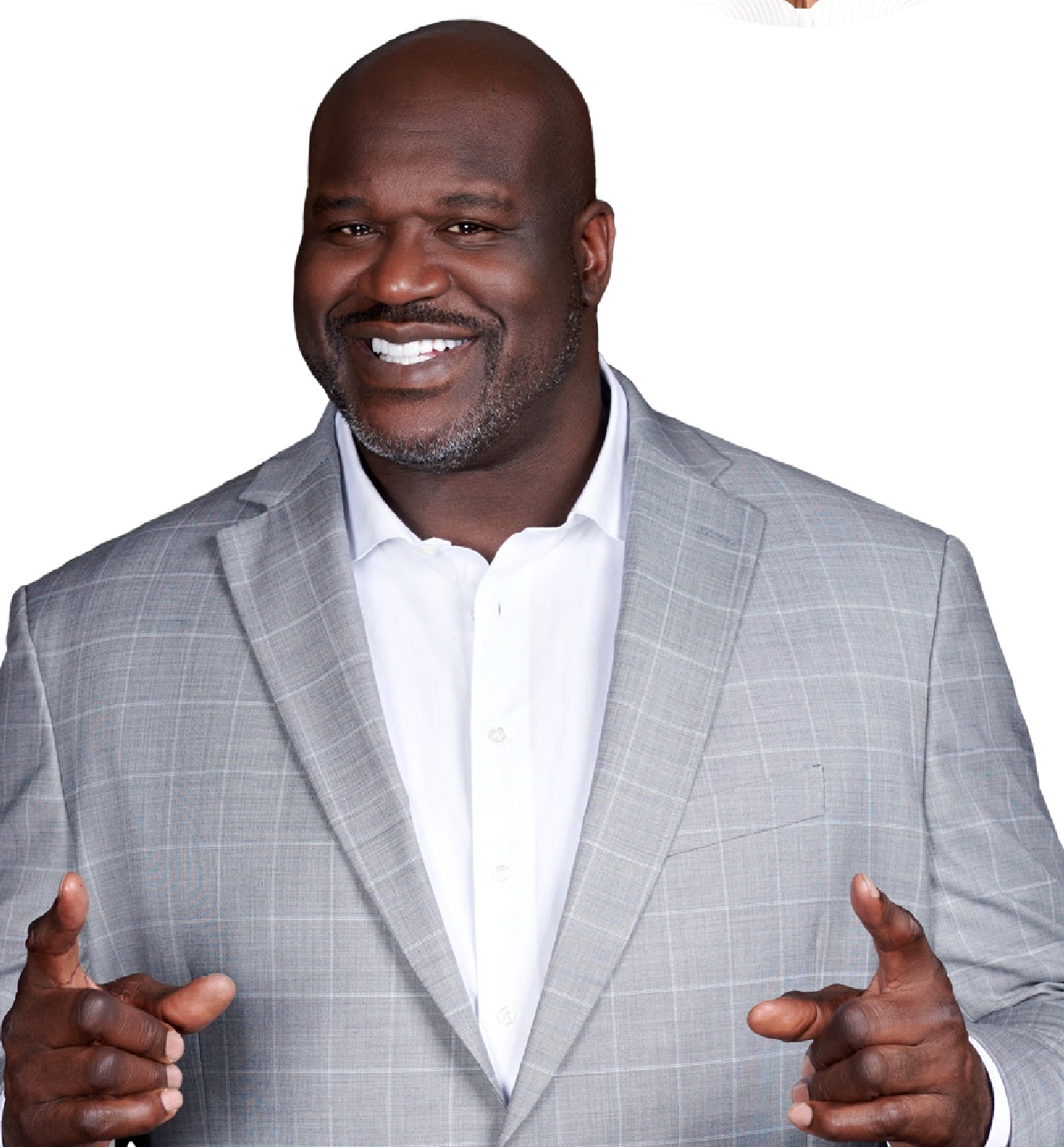
Shaq
Since retiring, this larger-than-life basketball player has made a second career out of wise investing. With a net worth of over $400 million (thanks, in part, to his ownership of multiple fast-food franchises), Shaquille O’Neal owns 155 Five Guys burger joints, 17 Auntie Anne’s locations, as well as Papa Johns pizzerias, Krispy Kreme donut shops and Big Chicken sandwich eateries.



LeBron James
The NBA icon hit a slam dunk in 2012 when he invested less than $1 million in the build-your-own-pie startup Blaze Pizza, headquartered in Pasadena, California. Since then, the franchise has mushroomed into more than 340 locations across 38 states and six countries. As of 2020, this part ownership/investment in the fast-casual pizza franchise has delivered an equity stake of about $35 million.
COURTESY OF WHATABURGER; UPI & WIRESTOCK, INC./ALAMY STOCK PHOTO; FRANKLIN SHEARD JR/SHUTTERSTOCK.COM; KATHY HUTCHINS/SHUTTERSTOCK.COM; COURTESY OF STARBUCKS; MEDIAPUNCH INC. & FELIX CHOO/ALAMY STOCK; COURTESY OF STRETCH ZONE; LEV RADIN/SHUTTERSTOCK.COM; COURTESY OF JAMBA JUICE; COURTESY OF DAVE’S HOT CHICKEN; EUGENE POWERS/SHUTTERSTOCK.COM; DFREE/SHUTTERSTOCK.COM; COURTESY OF POPEYES; AFF/ALAMY STOCK PHOTO; COURTESY OF BLAZE PIZZA; ©BIANCA PIERRE; COURTESY OF PAPA JOHNS, AUNTIE ANNE’S & KRISPY KREME

Babyface is far ahead as the celebrity who makes the highest return on their investments—with An over 134.4% return on his net worth.
MONEY MAKERS
WHEN IT COMES TO MAKING MONEY, CELEBRITIES SEEM TO HAVE IT ALL FIGURED OUT. FROM YOUR FAVORITE SCREEN STARS TO MUSICIANS AND MULTIMILLION-DOLLAR PORTFOLIO INFLUENCERS, HERE’S A DATA-BACKED SNAPSHOT OF SOME STANDOUTS WHO ARE GROWING THEIR WEALTH BEHIND THE SCENES.
I n the world of fame and fortune, some celebrities go beyond the spotlight and strategically build wealth through diverse investments. After all, versatility is key in the entertainment industry—just as much as it is in the bank. On average, celebrities invest $38 million per investment venture and a third have invested over $100 million in a single business investment.
Celebrity investors are continuing to knock it out of the park, according to a study conducted by FOREX.com, a wholly-owned subsidiary of the StoneX family—a Nasdaq-listed company with assets of $7.8 billion that provides an institutional-grade financial services network to connect people to the global markets. Their finance and trading experts analyzed celebrity investments across various assets, including luxury properties, business ventures, intellectual property, financial instruments, vehicles and collectables, as well as endorsement deals to uncover where celebrities invest their money.
STAR INVESTORS
The ’90s superstar Kenneth Brian Edmonds, better known by his stage name Babyface, is far ahead as the celebrity who makes the highest return on their investments—with an over 134.4% return on his net worth. This is over double the return (120.89%) singers typically make on average compared to their net worth (13.51%). Edmonds owns more than 20 properties across the globe, including a $7 million New York property and a $3 million mansion in Paris. The star is also known to own at least five vehicles, including a Bugatti Chiron, worth a staggering $3 million.
One of the youngest celebrities in the ranking, TikTok star Chase Hudson (Huddy) ranks second, with a whopping 68.7% return on his net worth of $11 million. Huddy has invested his wealth into real estate and luxury vehicles, including a six-bedroom luxury home in California valued at $9 million and an impressive car collection that includes two Jaguars and a $590,000 Ferrari F8.
Music icon Billy Joel has a net worth of $230 million and has also proven to be a savvy investor. His 52.2% return on net worth earns him a third place in the rating. His impressive real estate portfolio includes a 14,000-square-foot mansion in New York and a Manhattan apartment. Notably, his New York mansion has been listed for sale with an asking price of $49 million, showcasing his keen eye for valuable real estate. Beyond music and property, Joel’s financial empire extends to his record label and publishing company, stocks and various other lucrative ventures.
From these findings, it’s interesting to not only highlight who is a great investor but also which professions are making the smartest financial decisions and bringing in the dough. For example, out of 233 celebrities analyzed, YouTu- bers were found to generate the best return on their investments. While typically having the lowest net worth to initially invest, You-Tubers generate a 13.6% return on their net worth on average. This is almost a 7% higher return than comedians, who tend to have the lowest returns at 6.62% of their net worth, on average.
On the other hand, despite having the highest average net worth, athletes are not the most successful investors, with a below-average return on net worth of just 9.84%.
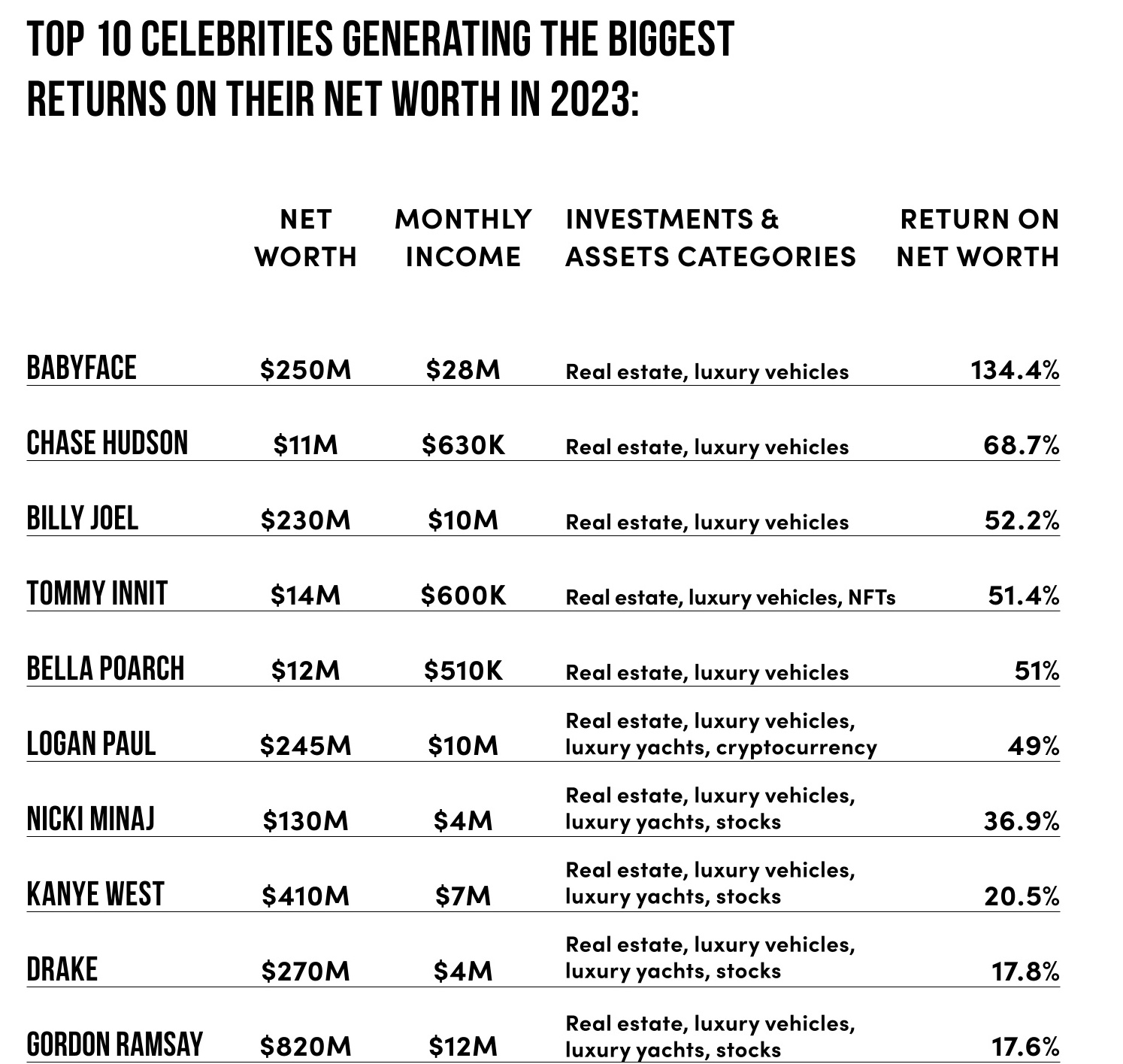
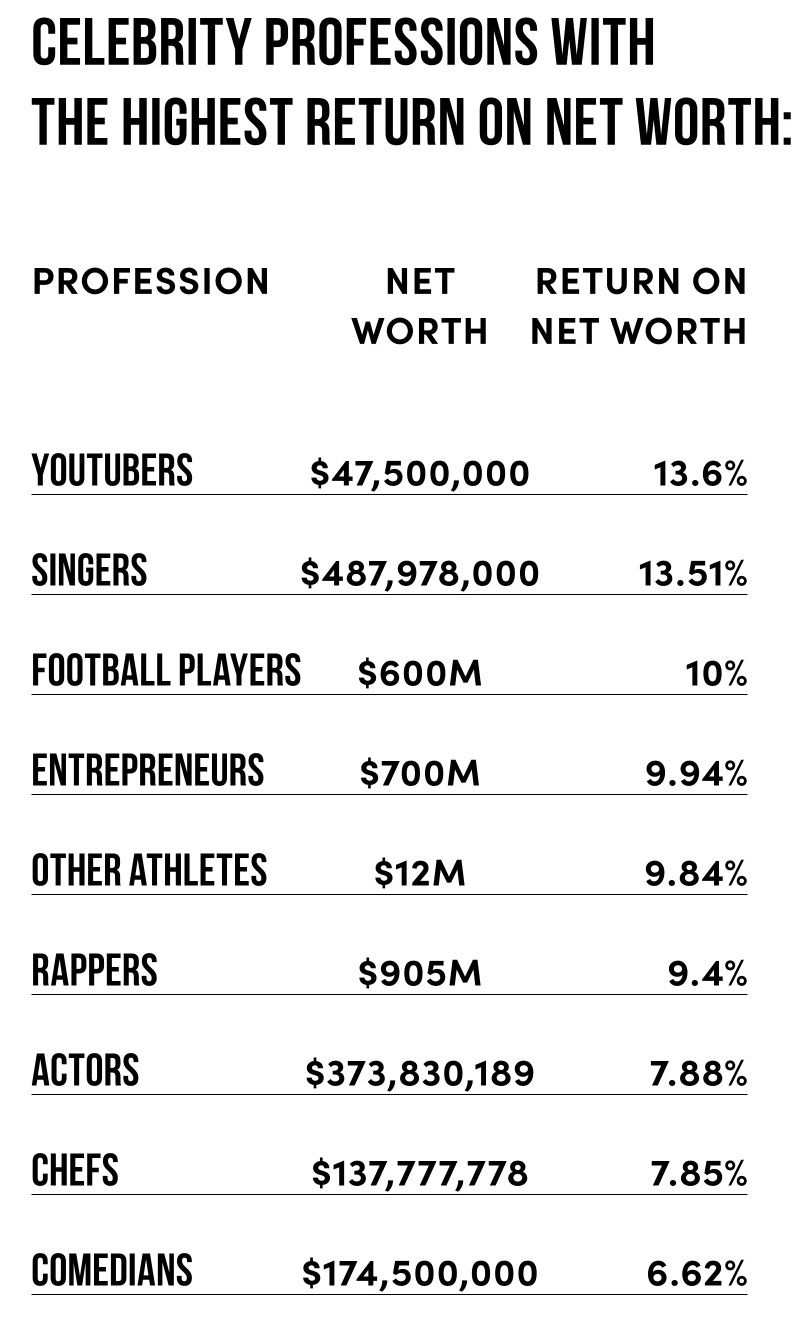

ZUMA PRESS, INC/ALAMY STOCK PHOTO; ALL STATISTICS, RESEARCH AND FINDINGS COURTESY OF FOREX.COM; DEBBY WONG & TINSELTOWN/SHUTTERSTOCK.COM

Top 50 Franchises
EXPAND YOUR OPPORTUNITIES WITH THESE SUCCESSFUL, FAST-GROWING PICKS.
S tarting a business can be intimidating. But opening a franchise can make the process a little easier for would-be entrepreneurs. These tried-and-tested business opportunities come with more support, greater brand recognition and economies of scale. If you’re hoping to start a business this year, consider these top franchise picks.

Automotive
AAMCO
Initial investment: $234,800 to $353,200
Number of global locations: Nearly 600


Education
CHALLENGE ISLAND
Initial investment: $39,675 to $68,925
Number of global locations: Nearly 150
CODE WIZ
Initial investment: $150,000 to $237,400
Number of locations: 20+
THE GODDARD SCHOOL
Initial investment: $879,950 to $1,229,950
Number of locations: 600+
KUMON
Initial investment: $67,428 to $145,640
Number of global locations: Nearly 25,000
MATHNASIUM
Initial investment: $112,860 to $149,155
Number of global locations: 1,100+
TIERRA ENCANTADA
Initial investment: $1,032,525 to $2,619,530
Number of locations: 10+

Fitness
ACE PICKLEBALL CLUB
Initial investment: $910,455 to $1,281,290
Number of global locations: 80+ in development
CYCLEBAR
Initial investment: $351,475 to $501,875
Number of global locations: 280+

Food
AUNTIE ANNE’S®
Initial investment: $148,575 to $572,100
Number of global locations: 1,900+
BASKIN-ROBBINS
Initial investment: $90,000 to $625,000
Number of global locations: 7,800+
BIGGBY® COFFEE
Initial investment: $246,305 to $564,626
Number of locations: 350+
BLAZE PIZZA®
Initial investment: $565,000 to $1,100,000
Number of global locations: 340+
BONCHON
Initial investment: $472,279 to $1,162,172
Number of global locations: 520+
CHECKERS® & RALLY’S
Initial investment: $751,117 to $2,125,751
Number of locations: 800+
DENNY’S
Initial investment: $1,428,424.75 to $2,326,574.75
Number of global locations: 1,500+
GONG CHA
Initial investment: $177,430 to $335,400
Number of global locations: 2,000+
JERSEY MIKE’S®
Initial investment: $144,668 to $786,233
Number of global locations: 2,400+
L&L HAWAIIAN BARBECUE®
Initial investment: $151,700 to $613,000
Number of global locations: 230
MARCO’S PIZZA
Initial investment: $286,852 to $805,927
Number of global locations: 1,100+
MOE’S SOUTHWEST GRILL®
Initial investment: $659,075 to $1,839,390
Number of global locations: 700+

NOTHING BUNDT CAKES®
Initial investment: $483,600 to $699,700
Number of global locations: 500+
PIZZA HUT
Initial investment: $367,000 to $2,063,500
Number of global locations: 19,000+
SCOOTER’S COFFEE®
Initial investment: $797,000 to $1,341,500
Number of locations: 750+
SMOOTHIE KING®
Initial investment: $311,601 to $1,379,150
Number of global locations: 1,350+

SUBWAY®
Initial investment: $229,050 to $522,300
Number of global locations: Approximately 37,000
WABA GRILL
Initial investment: $341,000 to $577,000
Number of locations: Nearly 200
WINGSTOP
Initial investment: $315,310 to $948,080
Number of global locations: 2,000+
WING ZONE
Initial investment: $420,800 to $751,000.
Number of global locations: 60+
ZIGGI’S COFFEE
Initial investment: $467,000 to $2,000,000
Number of global locations: 200 (Some locations are in development.)
Graphics
FASTSIGNS®
Initial investment: $234,317 to $322,489
Number of global locations: 750+
Health and Wellness
THE JOINT® CHIROPRACTIC
Initial investment: $215,297 to $478,997
Number of locations: 900+

SPAVIA
Initial investment: $431,288 to $784,088
Number of global locations: 70+
Home Services
360CLEAN®
Initial investment: $21,800 to $36,500
Number of locations: 70+
AMERICA’S SWIMMING POOL CO.
Initial investment: $84,395 to $207,368
Number of locations: 250+
BUDGET BLINDS®
Initial investment: $84,500 to $140,500
Number of locations: Nearly 1,500
CHEM-DRY®
Initial investment: $71,145 to $234,924
Number of global locations: Nearly 3,500

COLLEGE HUNKS HAULING JUNK & MOVING®
Initial investment: $158,700 to $288,500
Number of global locations: 200+
PILLAR TO POST HOME INSPECTORS
Initial investment: $101,740 to $132,490
Number of locations: 550+
RAINBOW RESTORATION®
Initial investment: $169,336 to $325,900
Number of global locations: 300+
U.S. LAWNS®
Initial investment: $20,000 to $185,000
Number of global locations: 200+

Industrial
PIRTEK USA
Initial investment: $211,400 to $610,300
Number of global locations: 475+
IT Support
NERDSTOGO®
Initial investment: $133,333 to $181,032
Number of global locations: 35+

Personal Care Businesses
BLO BLOW DRY BAR
Initial investment: $309,031 to $379,502
Number of global locations: 140+
GREAT CLIPS®
Initial investment: $183,400 to $394,400
Number of global locations: 4,400+
Pet Care

FETCH! PET CARE®
Initial investment: $74,967 to $80,667
Number of global locations: 115+
Senior Care Services
OASIS SENIOR ADVISORS®
Initial investment: $59,290 to $93,490
Number of locations: 100+
VISITING ANGELS®
Initial investment: $125,460 to $171,150
Number of global locations: 500+
Shipping
THE UPS STORE
Initial investment: $101,818 to $476,993
Number of global locations: 5,500+
Sporting Goods
PLAY IT AGAIN SPORTS®
Initial investment: $300,000 to $410,000
Number of global locations: 300+
Please note that all information was accurate at the time of publication.
M. UNAL OZMEN/SHUTTERSTOCK.COM; RAWPIXEL.COM/SHUTTERSTOCK.COM; COURTESY OF THE GODDARD SCHOOL; BALANCEFORMCREATIVE/SHUTTERSTOCK.COM; COURTESY OF CYCLEBAR, NOTHING BUNDT CAKES & CHECKERS & RALLY’S; COURTESY OF SUBWAY, SPAVIA & COLLEGE HUNKS HAULING JUNK & MOVING; COURTESY OF NERDSTOGO/METROPLEXWRAPS.COM; ANTONIODIAZ & SVETOGRAPHY/SHUTTERSTOCK.COM



GROUP CHAT
Danny Taing
After graduating from Stanford University, Danny Taing tried his hand at getting a startup off the ground. When that didn’t work, he launched another. And then another. The fourth time was the charm, and Bokksu, his Japanese snack subscription business, quickly took off. Taing’s secret? The ease and delight of premium, regionally made foods being delivered to one’s doorstep, of course, but also Taing’s business model, which is designed to preserve the craftsmanship and history of the Japanese families making the snacks.
Read more online at SUCCESS.com
COURTESY OF BOKKSU
GROUP CHAT | MY WAY
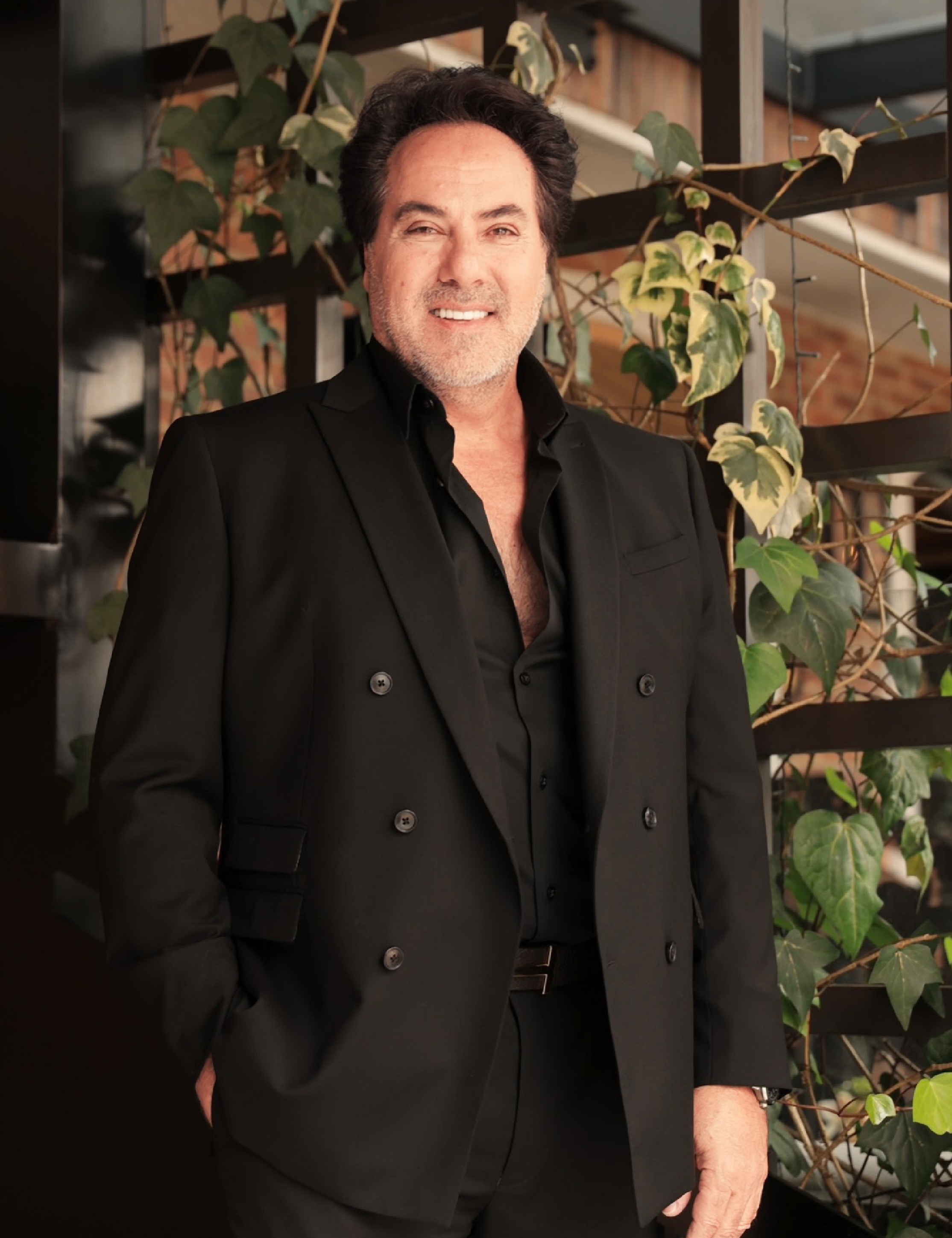
Antonio Sustiel
MIAMI BEACH, FLORIDA
Antonio Sustiel came to the United States in his early 20s with $400 in his pocket and a firm belief in the power of hard work. Not one to ignore potentially lucrative opportunities, the Israeli native dabbled in sales and real estate investments before founding his Miami-based flooring distribution business, Flooring King. Now with several store locations across Florida and appearances on CNBC’s Blue Collar Millionaires, Bloomberg TV’s The American Dream Show and mentions in media outlets including The Miami Herald and The New York Daily News, it’s clear Sustiel’s approach to entrepreneurship is one to be revered. Here, he shares the mindset and actions that helped pave his path to success.
I ALWAYS START MY DAY WITH…
two bottles of water and two cups of coffee!
ONE THING I DO EVERY DAY IS…
make sure to walk four miles and do 15 minutes of meditating.
MY MANTRA IS…
to embrace every challenge as an opportunity for growth and to always strive for excellence in everything that I do.
MY BIGGEST SOURCE OF INSPIRATION IS…
definitely my family—especially my father. I grew up in Israel in a family that immigrated from Greece and Egypt. They outworked everybody and they never gave up. I have always been inspired by their resilience and their ability to tackle challenges head on.
ONE THING THAT’S DIFFICULT FOR ME BUT THAT I ENJOY IS…
skateboarding! It requires a lot of balance, coordination and athleticism, and that’s all fine and dandy when you are 13, but when you turn 60 and you’re still doing it, it’s not as easy.
I HANDLE NEGATIVITY BY…
not paying attention to it and extricating myself from people who have negative energy. I believe we need to have a positive mindset and attitude every day.
MY ADVICE TO BUDDING ENTREPRENEURS WOULD BE…
never underestimate the power of perseverance. Entrepreneurship is a journey that’s filled with a lot of ups and downs, but if you stay determined and persistent, that can make all of the difference. Embrace failures as opportunities to learn and grow. Adapt to changes and keep pushing forward. Success often comes to those who are willing to keep going and persevere when faced with obstacles. I love the saying, “Winners never quit and quitters never win.”
FOR A JOLT OF ENERGY…
I take a short break or I get some exercise in. I take short walks [or] practice deep breathing. Also getting good sleep is important, and so is listening to your body and making sure you give yourself time off when you need it to recharge your batteries.
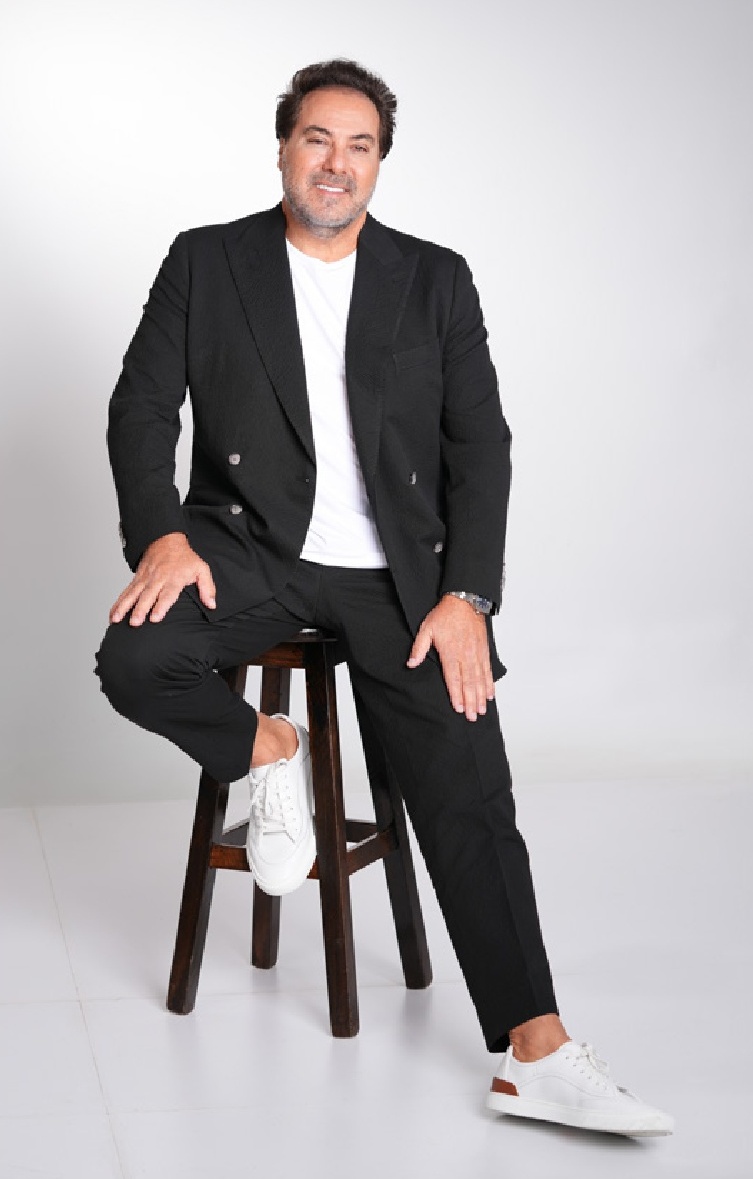
THE MOST SURPRISING THING ABOUT ME IS…
that I’m 60 years old and I’m still skateboarding, traveling a ton, looking into getting fast boats and getting back into surfing after I took a break from the sport 40 years ago!
THE BIGGEST RISK I EVER TOOK WAS…
moving to the United States with $400 in my pocket and starting a new life.
I WANT PEOPLE TO KNOW ME FOR…
the positive impact I make in their lives. I want to inspire others through my actions and my words, and I want to help others achieve their goals. I want to be known as someone who is dependable, trustworthy and generous.
IN 10 YEARS, I HOPE TO…
have a strong support system of friends and family who have been by my side throughout my journey, and I want to continue to have a happy work-life balance.
I DEFINE SUCCESS AS…
not being solely based on achievements or wealth but rather about having a healthy work-life balance and being able to find fulfillment in both my personal and professional life. Success means setting goals and working toward them with determination, grit, resilience and integrity.
©FERNANDO RIVERA/COURTESY OF ANTONIO SUSTIEL
GROUP CHAT | CALENDAR
Who, What, Where
DON’T MISS THESE IN-PERSON AND VIRTUAL INDUSTRY EVENTS HAPPENING SOON.

SMALL BUSINESS EXPO
MAY 2
New York, NY
B2B ONLINE
MAY 6–8
Chicago, IL
THE DIGITAL TRANSFORMATION CONFERENCE
MAY 9
London, England
digitaltransformationconf.co.uk
UXDX USA
MAY 15–17
New York, NY
CAPITAL CAMP
MAY 21–23
Columbia, MO
THE FUTURE OF EVERYTHING FESTIVAL
MAY 21–23
New York, NY
GARTNER CSO AND SALES LEADER CONFERENCE
MAY 21–22
Las Vegas, NV
gartner.com/en/conferences/na/sales-us
TECHSPO
MAY 22–23
Chicago, IL
DUBLIN TECH SUMMIT
MAY 29–30
Dublin, Ireland
INTERNATIONAL FRANCHISE EXPO
MAY 30–JUNE 1
New York, NY
GARTNER MARKETING SYMPOSIUM
JUNE 3–5
Denver, CO
gartner.com/en/conferences/na/marketing-symposium-us
AI & BIG DATA EXPO
JUNE 5–6
Santa Clara, CA
SHRM
JUNE 23–26
Chicago, IL
COURTESY OF COLLISION

GROUP CHAT | MENTOR MESSAGE

Achieving Financial Prosperity
CHOOSING THE APPROPRIATE WEALTH MANAGEMENT ADVISER IS COMPARABLE TO CHOOSING A RELIABLE ALLY ON YOUR PATH TO FINANCIAL SUCCESS.
Chandler te Velde
B eyond the realm of traditional income streams, strategically directing your resources toward personal investments is the key to creating a robust and secure financial future. Whether you’re independently wealthy, own a lucrative business or figure it’s time to inquire about legacy planning as you approach your golden years, it’s important to have the right people in your corner. After all, making smart choices in your investments is not just about growing your wealth but ensuring a life of abundance and security—for you and your family.
GUIDING YOU TO MONETARY ACHIEVEMENT
Selecting the ideal wealth management adviser for individuals and businesses is critical to attaining fiscal success. A proficient adviser acts as a guiding force, offering personalized strategies that align with unique goals and circumstances. For individuals, this means effective wealth accumulation, comprehensive financial planning and the assurance of a secure future. In the business realm, a skilled wealth management adviser becomes an integral part of decision-making, steering the company toward sustainable growth, risk mitigation and efficient resource allocation.
Chandler te Velde is a partner at Maia Wealth and a dedicated wealth management adviser. Her firm approaches the often intimidating world of financial management as a transformative journey where they ensure purposeful financial planning that suits the needs of individuals and businesses to achieve their monetary goals.
“FINANCIAL PLANNING IS NOT JUST ABOUT HITTING SHORT-TERM GOALS BUT IS A CRUCIAL ROADMAP FOR MANAGING RESOURCES EFFECTIVELY, ADAPTING TO LIFE CHANGES AND BUILDING WEALTH OVER TIME.”
Te Velde, a California native who studied finance at the University of Denver, discovered a passion for financial planning early in her career. As a fiduciary wealth management adviser with a Series 65 license and a CERTIFIED FINANCIAL PLANNER™ designation, her expertise in finance has been marked by a commitment to fostering strong relationships.
The story of Maia Wealth began in 2017 when te Velde and her business partners identified a gap in the financial services industry. Their vision was twofold: first, to create a space where clients at any stage of their financial journey could receive tailored advice aligned with their goals and values, and second, to establish an environment where advisers could run their practice with autonomy and transparency. From its humble beginnings with three individuals in a shared workspace in downtown Denver, Maia Wealth has grown into a family of 40 people with offices in Denver, Chicago, Houston and Indianapolis, serving clients nationwide. The foundation of Maia Wealth lies in collaboration, ultra-transparency and a commitment to providing both clients and advisers the tools they need for success.
COMMUNICATION IS KEY
Te Velde believes in the importance of transparent communication, active engagement in the planning process and a dedication to long-term financial strategies in adviser-client relationships. “Trust and collaboration are fundamental pillars for success,” she says. “For individuals embarking on their financial journey, it’s important to start early with purpose and intention. Regardless of the stage in one’s financial life, engaging with a fiduciary adviser and implementing strong financial planning foundations can set the stage for future success.”
She also reassures those who may feel behind, stating that it’s never too late to start taking control of your financial future. “Financial planning is not just about hitting short-term goals but is a crucial roadmap for managing resources effectively, adapting to life changes and building wealth over time,” she adds. “The structure and clarity provided by financial planning empower individuals, offering peace of mind on their journey to achieving life’s aspirations.”
“TRUST AND COLLABORATION ARE FUNDAMENTAL PILLARS FOR SUCCESS.”
THINGS TO CONSIDER
Legacy planning and wealth transfer can be complex and sensitive matters, and at Maia, these are areas where te Velde and her team provide valuable advice. Fostering open communication among family members, defining shared values and creating comprehensive estate plans are essential components of their approach.
“In our practice, we prioritize holistic goal-based financial planning,” she explains. “Beyond investment strategies, we take into consideration tax implications, planning tactics, risk management and estate planning.” All of these attributes contribute to a wealth plan that is unique to each client and creates the most opportunity for monetary growth for the family long term.”
Not only is te Velde’s mission to educate and empower clients, but she also enables them to make informed decisions about their financial future while providing ongoing support and guidance. “When it comes to wealth management and making smart decisions, the best advice I can give is that everyone’s journey to financial success is different. It is not a solo endeavor, and with the right adviser, individuals and businesses can navigate the complexities of wealth management with confidence and purpose.”
Ultimately, selecting the right adviser will bring financial expertise into your sphere and a commitment to building lasting relationships, fostering trust and adapting strategies to evolve your needs. In doing so, your partnership will become a vital step towards achieving both short-term objectives and long-term prosperity. Something we all work hard to achieve.
COURTESY OF CHANDLER TE VELDE

GROUP CHAT | ROUNDUP

Erika Andresen, founder of EaaS Consulting
Unlocking Resilience
How to Not Kill Your Business helps leaders navigate disruptions beyond disasters.
Y ou might think the term “business continuity” only applies to recovering from natural disasters. However, business disruptions can emerge in several ways—from a single employee’s departure, a supply chain glitch or communication breakdowns.
Navigating today’s tumultuous economy involves challenges and unforeseen disruptions. Business continuity planning—crucial for businesses of all sizes—ensures seamless operations, whether disruptions are a tiny tremor or a seismic shift.
Erika Andresen, founder of EaaS Consulting, LLC, underscores this in her book How to Not Kill Your Business: Grow Your Business in Any Environment, Navigate Volatility, and Successfully Recover When Things Go Wrong. She defines business continuity as the key to securing and ensuring uninterrupted business operations, offering resilience in the face of both disasters and disruptions, whether natural or human-made.
INSPIRATION BEHIND THE BOOK
When Andresen first launched her consulting firm, she targeted mom-and-pop shops, feeling they most needed business continuity.
“I was coming… from a place of helping those who needed it most—and small businesses, by and large, are completely unaware of the practice of business continuity,” says Andresen, noting that global corporations and large companies have been practicing it for decades. Andresen felt there was no reason for small companies to not engage in business continuity, too, so she set out to change that.
But in her initial market research, she discovered smaller shops had no interest in spending money on business continuity. Instead of allowing this to kill her business, Andresen pivoted, writing her book with small business owners top of mind. “I want to move the needle for $5 on Kindle or $20 for paperback to protect their investment and keep their dream alive.”
KEY INSIGHTS FOR ENTREPRENEURS
Many small businesses delay action, either waiting to grow or until a crisis looms. Andresen highlights the peril of optimism bias—the belief you’ll only have positive experiences and the odds of negative experiences won’t impact you. “Waiting only causes things to happen at a slower pace,” she says, noting that proactive measures better prepare you for future disruptions.
Andresen shares a valuable lesson from one of her solopreneur clients. Initially, the client was hesitant to apply business continuity principles until she grew her business. But her vulnerabilities became apparent through a series of questioning from Andresen. After implementing Andresen’s suggestions, the client realized she couldn’t grow without the security business continuity offers. “Business continuity buys you confidence, security, opportunity and time,” Andresen says.
“THIS IS NOT SUPPOSED TO BE A ONE-OFF, CHECK-THE-BOX EVENT. IT’S A LIVING DOCUMENT THAT WILL KEEP A BUSINESS THRIVING, CLIENTS SATISFIED AND EMPLOYEES EMPLOYED.”
PROACTIVE PREPARATION FOR VOLATILITY
Proactively preparing for and navigating volatility only starts with creating a business continuity plan. Andresen says you also need to train and exercise the plan—starting at the top.
“Without leadership buy-in, the preparedness for an effective business continuity plan plummets,” she explains. Staff training and exercising the plan allows everyone to learn what to do and what could go wrong. “It’s better to figure this out in advance than during the disaster,” Andresen says, noting that working ahead provides an opportunity to fix the plan. “This is not supposed to be a one-off, check-the-box event. It’s a living document that will keep a business thriving, clients satisfied and employees employed.”
CULTIVATING RESILIENCE
Andresen weaves the theme of resilience throughout her book, guiding readers through self-reflection and prompting them to identify blind spots or unrecognized pain points. For instance, she notes that the pandemic shifted the value paradigm toward employees as the most important asset. “You cultivate organizational resilience by investing in the people who work for you, who execute the procedures the way you want and who are the face of your company when they interact with clients,” Andresen says.
Also, Andresen advises that looking ahead and anticipating risks creates an agile company. “Agility promotes creativity and growth. Don’t see it as a cost or chore—it’s an opportunity,” she explains.
Owners can build their personal resilience by creating businesses that do not need them present 24/7. “Getting ahead of risks, installing control measures for any single points of failure and building redundancies—all part of the business continuity process—will give business owners the freedom to step away, recharge and trust that the business will continue thriving.”
BALANCING GROWTH WITH STABILITY AND SUSTAINABILITY
Andresen provides a stark reality check in a growth-focused world. Growth, she contends, is impossible without stability, and stability is unattainable without business continuity. Building a business continuity plan allows owners to learn the ins and outs of their business and identify their critical operations crucial for survival, she explains. Most owners make a lot of assumptions about what those critical operations are. But without having done a risk assessment with a business impact analysis, she argues, they may be investing time and money in the wrong strategy. “The cost of not doing business continuity is too high: loss of market share, loss of customers, loss of employees, loss of reputation and, ultimately, the loss of your business,” she explains. “How can you grow from that? You can’t.”
COURTESY OF ERIKAANDRESEN
GROUP CHAT | FROM THE ARCHIVES
The Triumph of Invention
SEPTEMBER 1898
A GLANCE AT THE UNITED STATES PATENT OFFICE AND ITS SYSTEM—INNUMERABLE TRIUMPHS OF AMERICAN INGENUITY.
T he Patent Office, in Washington, D.C., probably interests more people throughout the United States than any other bureau in the great departments located there. Beneath its vast roof are housed the trophies of the inventive genius of the country for more than a hundred years, besides copies of thousands of devices that were made beyond the seas.
EARLY INVENTIONS
From 1790 to 1802, the entire work of the Patent Office was performed by a single clerk in the State Department, and all of its records did not fill a dozen pigeonholes. However, the business of the news bureau was broadening.
In 1802, Dr. William Thornton was appointed its superintendent. History describes him as a “gentleman of scientific attainments,” and, like some gentleman of that distinction at the present time, he was erratic in the extreme. He had views of his own, and one of them was that the patent law was made solely for the encouragement of authors and inventors, and that the little matter of financial return to the government was of such minor importance as to require small attention from him. For 26 years, he held autocratic control of the office. After his death, there was found to be a deficit in the treasury of the amount that should have been to the credit of the Patent Office. No one thought of impugning his personal honor but accredited it to his known liberality with patentees and his lack of system.
His devotion to the work of the office was unbounded. During the War of 1812, when the British captured Washington and destroyed the Capitol and other public buildings, a loaded cannon was trained on the Patent Office. Thornton is said to have rushed out, and, in a frenzy of excitement, to have thrown himself in front of it, crying: “Are you Englishmen, or only Goths and Vandals? This is the Patent Office, a depository of the ingenuity of the American nation, in which the whole civilized world is interested. Would you destroy it? If so, fire away, but let the charge pass through my body!” The effect of such heroism was magical, and the office was saved from destruction.
During the early years of the century, the Patent Office was located in the old War Department building, but in 1812, Congress purchased, “for the General Post Office and Keeper of the Patents,” a big barn-like structure that stood on the southwest corner of what is now Post Office block. There it remained until the fire of 1836. However, it had to be enlarged several times during the interim. In 1836, Congress passed a law reorganizing the entire system of patents and inaugurating practically the one now in force. It was still combined with the Department of State but was made a separate bureau, and its chief was designated the Commissioner of Patents and given a force of eight men—which was characterized as “a reckless piece of extravagance in clerk-hire” by some of the economical statesmen of the time. Hardly had the reorganized bureau begun operations when, on the night of the 15th of December, 1836, there occurred the fire which swept out of existence almost everything connected with the Patent Office. 7,000 models; 168 volumes of records; 9,000 drawings; 10,000 original descriptions and specifications; and 230 volumes belonging to the scientific library were destroyed. The loss, which was perhaps of the most historical importance, was that of the drawings, made by the inventor, Robert Fulton, of the machinery of his steamboat and the illustrations of its initial trip up the Hudson, in 1807.
In many respects, the loss from this fire was irreparable, but Congress enacted that no patent granted before the fire could be given in evidence without being recorded anew, and in this way, the return of the most important was secured, and an index was compiled of the early transactions of the office.
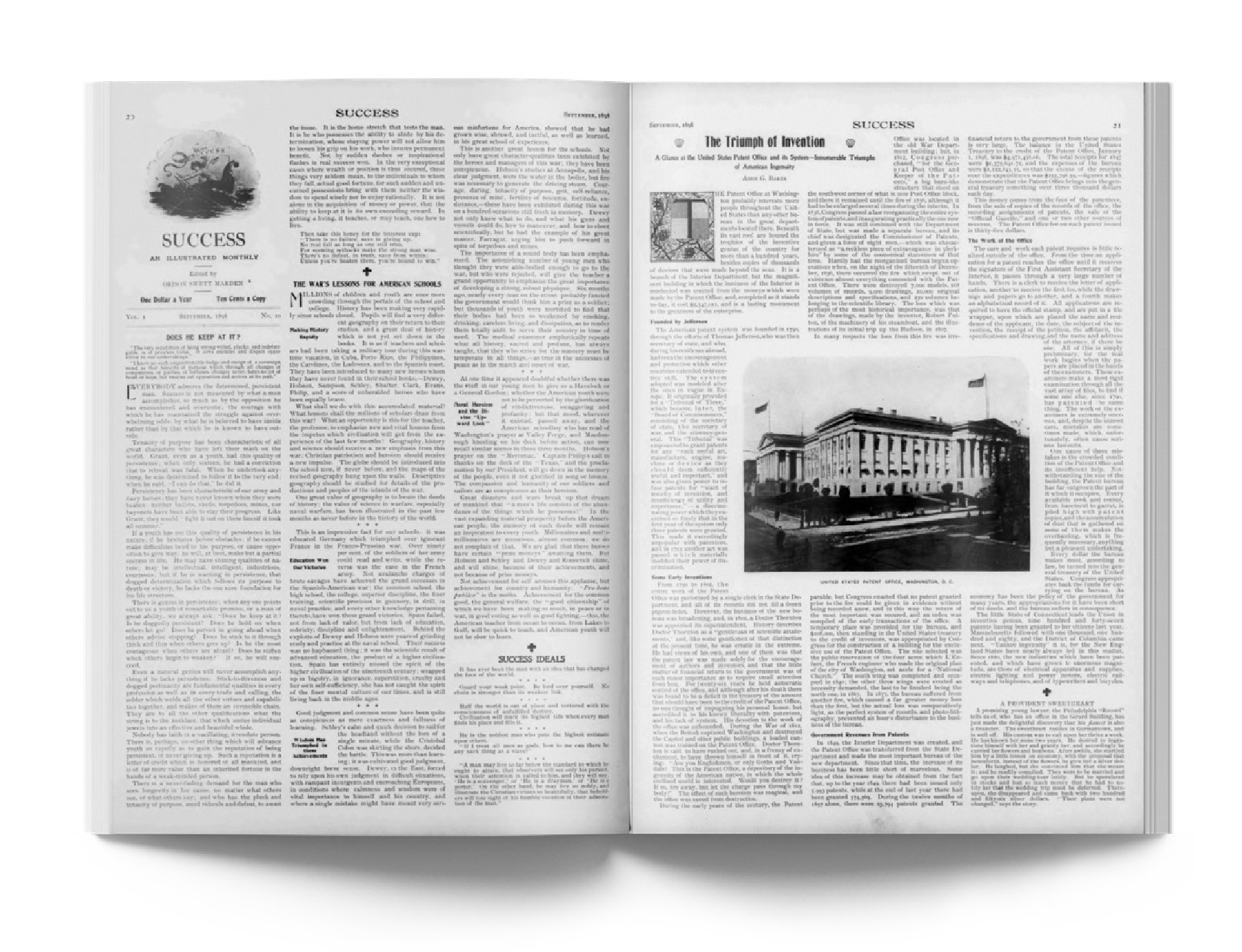
THE CARE AND WORK EACH PATENT REQUIRES IS LITTLE REALIZED OUTSIDE OF THE OFFICE.
THE WORK OF THE OFFICE
The care and work each patent requires is little realized outside of the office. From the time an application for a patent reaches the office until it receives the signature of the First Assistant Secretary of the Interior, it passes through a very large number of hands. There is a clerk to receive the letter of application, another to receive the first fee, while the drawings and papers go to another, and a fourth makes an alphabetical record of it. All applications are required to have the official stamp and are put in a file wrapper, upon which are placed the name and residence of the applicant, the date, the subject of the invention, the receipt of the petition, the affidavit, the specifications and drawing and the name and address of the attorney if there be one. All of this is simply preliminary for the real work begins when the papers are placed in the hands of the examiners. These examiners make a most rigid examination through the vast array of files, to find if someone else, since 1790, has patented the same thing. The work of the examiners is extremely onerous, and, despite the utmost care, mistakes are sometimes made, which, unfortunately, often cause serious lawsuits.
The little state of Connecticut leads the Union in inventive genius, 947 patents having been granted to her citizens last year. Massachusetts followed with 1,180, and the District of Columbia came next. “Yankee ingenuity” it is, for the New England states have nearly always led in this matter. Since 1880, the new industries which have been patented, and which have grown to enormous magnitude, are those of electrical apparatus and supplies, electric lighting and power motors, electric railways and telephones, and typewriters and bicycles.
PATENT INNOVATION TODAY
According to the most recent data from the World Intellectual Property Organization, countries with the highest patent activity include China, the U.S., Japan and the Republic of Korea.
The top 10 highest patent-producing states based on U.S. Patent Office data:
California
Inventors: 59,166
Texas
Inventors: 14,240
Massachusetts
Inventors: 12,268
Washington
Inventors: 10,887
New York
Inventors: 9,816
Michigan
Inventors: 7,992
Illinois
Inventors: 7,107
Pennsylvania
Inventors: 6,324
Florida
Inventors: 5,732
Ohio
Inventors: 5,575
GROUP CHAT | MARKETING MEMO

Where the Two Ends of Email Marketing Meet
EMAIL EXPERT CHRIS ORZECHOWSKI SHARES HIS TRADE SECRETS WITH E-COMMERCE BRANDS.
C hris Orzechowski does not wear watches. But that didn’t stop him from writing the copy for the luxury timepiece brand Filippo Loreti in 2016, a campaign that raked in more than $5 million in just 30 days to become the 18th-largest Kickstarter campaign ever, at the time.
His secret: Before writing a word, he bought a watch. He became the customer he was trying to connect with. He learned what features to ask about, what benefits to look for and how the purchase made him feel. He understood the journey, the sale and the product—he understood the customer.
Nowadays, Orzechowski is one of the most sought-after email copywriters in the e-commerce world—but he’s dually an expert in the back end of email marketing, too. In less than a decade, he’s helped more than 200 brands earn over $100 million via email campaigns and automated email flows, and coached thousands of e-commerce brand owners to scale their businesses with his strategies.
The focus of his expertise is couched in connecting the front end of your business (i.e., your product and your copy) with the back end (i.e., your email lists and your automations) to make them work for each other. When the two ends meet, the growth can be astronomical.
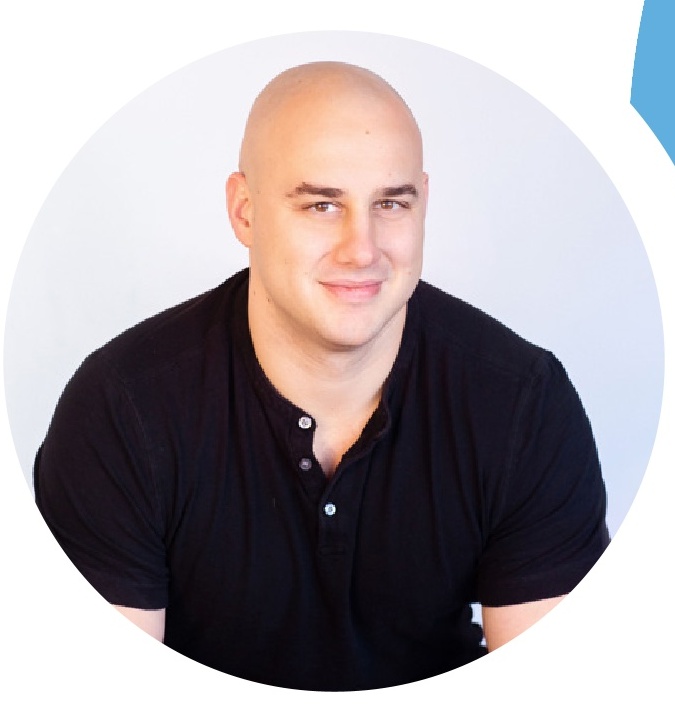
THE BACK END: REVENUE-PER-SUBSCRIBER AND EMAIL AUTOMATION
On average, brands are making around $2.80 for every dollar they spend on social media ads. Not a bad turnaround—but compare that to the average $36-to-$1 ROI for email marketing and you’ll start to understand why Orzechowski is all-in on the latter.
“The thing that I love about email so much is [it’s] mostly free besides your software fee each month,” he says. “But [also that] it’s instant. You could send an email out, and within five minutes, money’s coming in. Talk about having control over your cash flow, over your business, over your future, over your destiny—that’s pretty cool.”
As rewarding as instant results are, email marketing is about the long game. Retention, keeping the iron hot and compounding sales. When you make a front-end sale, that should cue back-end development—whether someone bought something or just indicated interest, there’s work to be done and money to be earned. So, while ROI is the big-picture metric, Orzechowski prefers to assess the health of a business’ retention program in RPS: monthly revenue-per-subscriber.
“Most [money] is not made on the front end. Most of it’s made on the back end,” he adds. “So, if you are neglecting this [metric] and you have a low earnings-per-subscriber, that means you probably have immediate revenue opportunities within the back end of the business through the retention program.”
“Opportunity” is the keyword here. A low RPS does not indicate that you have a poor business, product or list of customers. It alerts you that there are holes in the bucket and that you are leaving money on the table.
Orzechowski has an easy solution to this back-end problem: automated email sequencing. Whether that’s a post-purchase sequence to win a customer back after the churn or an abandoned-cart sequence to remind them of their interest, automated email flows are simple integrations that permanently seal the holes you may not even know were dripping. (Orzechowski’s book Scale While You Sleep delves into his nine favorite automated email sequences that immediately boost RPS and ROI. It’s only 100 pages long and available on Amazon.)
“Build out your abandonment sequences first,” he recommends. “People who have indicated that they’re interested in buying, those are the hottest people and those are the lowest- hanging pieces of fruit.”
The best part of email automations is their longevity and low maintenance—Orzechowski says he built automations for clients back in 2017 that are still producing sales today, seven years after the clients paid him once. Talk about exponential growth in ROI over time.
For any emailers who are worried about “harassing” their customers with too many emails (a common and understandable worry), Orzechowski points out that multimillion-dollar brands are multimillion-dollar brands because they don’t share that concern. They’re not sending one newsletter a month—that’s money on the table. They’re sending several in a week—that’s money in the bank.
“Maybe success leaves clues,” Orzechowski says.
THE FRONT END: EMAIL COPYWRITING
Orzechowski’s other zone of genius is, of course, copywriting. Tracking the success of something subjective like writing sounds harder than tracking something objective like click-through rates. But Orzechowski says the two are inextricably linked.
“When it comes to copy, it’s simply a matter of [saying], ‘What numbers and metrics are low that we think we can improve upon?’” he says.
More often than not, the poor metrics you’re measuring are reflections of the buyer’s objections or hesitancies. Good copywriting (coupled with informed sequencing, of course) can address those head-on. “The funny thing is most copy is just making a big promise and then handling the objections that are standing in the way of the sale,” Orzechowski says. “[Copywriting is] just taking [the] same conversation that happens in a face-to-face, belly-to-belly scenario and putting the words on the paper. That’s where the best copywriters excel at—they can capture the essence of that conversation better than anyone else.”
That’s also his go-to advice for the copywriters he hires, coaches and mentors: It’s all about understanding the buyer’s journey from discovery to hitting the “buy” button. Writing effective copy requires immersing yourself in their specific needs, questions and concerns—like Orzechowski did for Filippo Loreti with record-shattering success.
“People don’t ever do this, and that’s why they struggle. They don’t understand the context of a specific market. They don’t understand the mindset of that market because they aren’t that market,” Orzechowski says. “You have to go out and actually become the customer. You have to be Daniel Day-Lewis. You have to be a method actor here.”
Orcheowski’s latest book, The Moat, walks founders through email, copywriting, customer acquisition offers and everything else businesses need to grow and scale their brand.
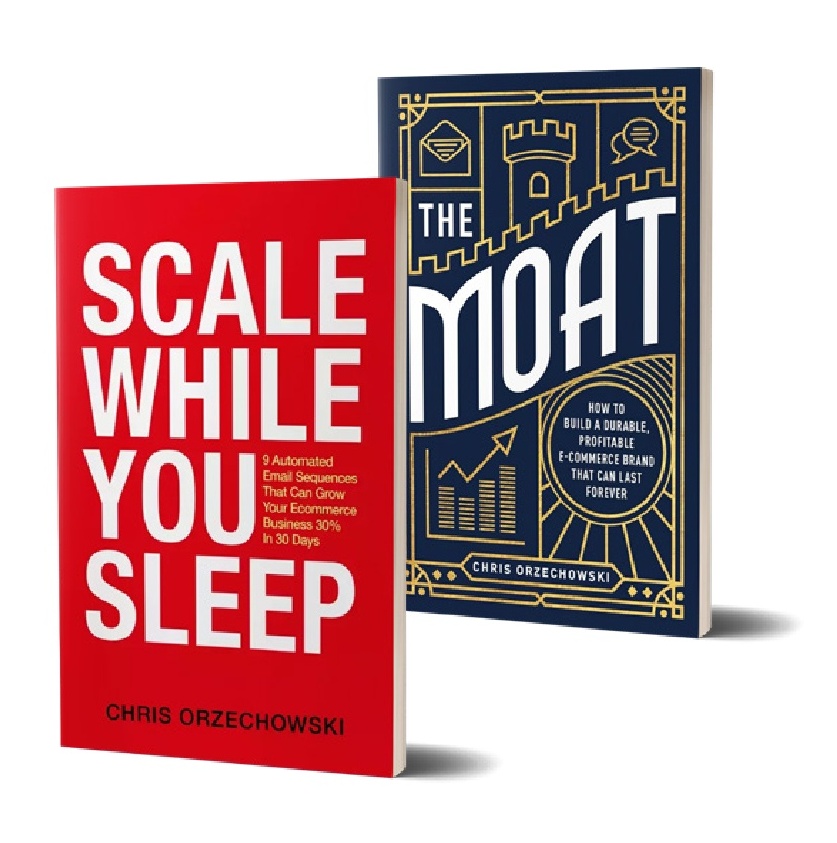
COURTESY OF CHRIS ORZECHOWSKI; JANE KELLY/SHUTTERSTOCK.COM
GROUP CHAT | GIVING BACK

‘Deleting’ Blood Cancer, One Donor at a Time
INTERNATIONAL NONPROFIT EXECUTIVE KATHARINA HARF AND DKMS ARE LEADING A GLOBAL MOVEMENT IN THE FIGHT AGAINST BLOOD CANCER AND OTHER DISORDERS.
I n 1990, Katharina Harf’s mother, Mechtild, was diagnosed with acute leukemia. She needed to find a stem cell donor, and none of her six siblings or other family members were a match. But there was a bigger problem.
“Back then, there were only 3,000 donors on the German registry,” says Harf of the country where she was born and raised. “And basically, 3,000 donors is nothing if you want to find a donor.”
This is how, in 1991, DKMS (or Deutsche Knochenmarkspenderdatei, if your German is good) got its start. Katharina’s father, millionaire Peter Harf, a brilliant businessman and longtime executive with the multinational beauty company Coty Inc., began raising awareness of this dire need for stem cell donors in Germany and helping people register with the life-saving national bone marrow registry.
A 14-year-old Katharina Harf was there in those early days, handing out flyers, appearing on TV shows and doing radio interviews alongside her sister. “It was hard, you know? It’s very important that you highlight specific patients, because obviously the community of family and friends, they want to help and to rally around that,” she says. “But it was really hard for my sister and [me] to be on the flyers and have our whole family [appear publicly].” Harder still, her mother ultimately did not survive her battle with blood cancer.
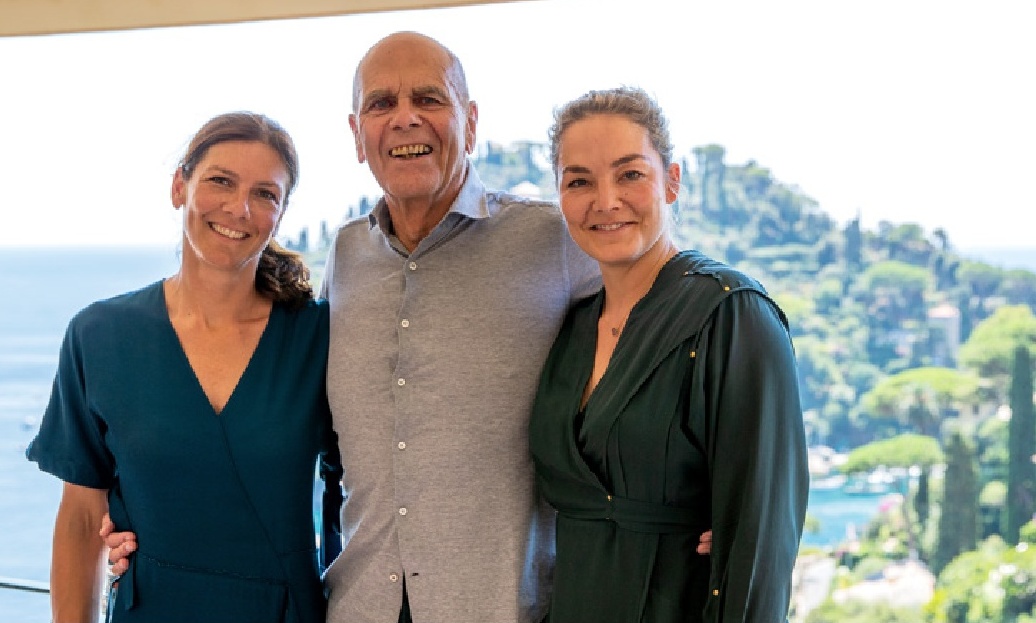
Viktoria von Wulffen and Katharina Harf with their father, Peter Harf.
But, before she died, Mechtild made her husband promise to continue in this work, so that other families wouldn’t have to experience what the Harfs went through. This would become the fuel that propelled DKMS to global success. In that first year, the nonprofit helped increase the number of registered donors in Germany from 3,000 to 68,000; today, the organization has registered 12 million donors worldwide, helping to coordinate more than 110,000 donations to patients in need. With the motto “We Delete Blood Cancer,” the organization is no longer only a stem cell donor center—it’s also a leader in research that supports the fight against blood cancers.
And Harf is still there. She founded the U.S. DKMS affiliate alongside her father in 2004, after attending Harvard University and dropping out of Columbia University’s executive program. (“I don’t even think I stayed for orientation,” she chuckles. “Because I just realized: It’s not for me.”) Instead, she too felt called to the work her father promised to do, and today, she’s the executive chairwoman of DKMS US and the chairwoman of DKMS’ foundation board.
Which is not to say that starting DKMS’ American division was a surefire thing. Harf remembers sitting in an office at Coty, where her father was an executive, staring at a computer and wondering where on earth to start. She can laugh about it today, but back in her early 20s, she remembers crying after one of the first U.S. donor drives—which she thought could bring in another 2,000 people—only led to another 150 donors signing up.
But Harf was not so easily discouraged, either. She traveled around to hospitals, meeting with doctors and patients, and continued organizing American donor drives. She followed the best practices that had worked so well for the organization in Germany. And she applied the things she remembered from her time spent advocating for her mother during her teens: calling newspapers, calling radio stations, handing out flyers.
“I think what is part of the DKMS philosophy is, ‘Never say no,’” Harf says. She credits the organization’s enduring impact with that dogged resourcefulness and with the fact that she did everything in a grassroots manner, slowly growing the U.S. division and bringing new people on board as it blossomed. “It was very challenging, but I feel like I always thought, ‘You know what? Every donor could save a life.’”
“I THINK YOU HAVE A DUTY AS A NONPROFIT TO RUN YOUR OPERATION COMPLETELY EFFICIENTLY, AND THAT’S WHY WE APPLY THOSE PRACTICES TO DKMS. FOR SOMEONE TO DONATE MONEY TO YOU, YOU HAVE TO BE COMPLETELY TRANSPARENT WHERE THEIR MONEY IS GOING.”
Harf is nearly as proud of DKMS’ financial sustainability as she is of its effect on those experiencing blood cancers. “We are very professionally run—my dad applied everything he knows from the business world to DKMS, only that our bottom line is saving lives,” she says. “I always say now, ‘I learned more from him than if I had gone to business school.’”
DKMS operates in such a way that they’re paid by patient insurance companies, and that money supports overhead costs to cover expenses or support their research in the field of blood cancer and blood diseases.
It’s not that they don’t rely on grants or donations—as with any nonprofit, every single dollar counts. But it means that when DKMS hosts one of its record-setting fundraising galas, the organization can tell people exactly where their donations are going: $5,000 will sponsor a transplant in Africa, for example, while $10,000 sponsors a child in India.
“I think you have a duty as a nonprofit to run your operation completely efficiently, and that’s why we apply those practices to DKMS,” Harf says. “For someone to donate money to you, you have to be completely transparent where their money is going.”

Katharina and her children.
Decades into this work, Harf says there’s always a new challenge: “I’m still really striving to create more diversity, especially in the U.S.”
Ethnicity is a major factor in whether cells will be a match, and so, while DKMS donor cells travel to 63 different countries, for example, roughly one-third of DKMS’ German donors donate to American patients. For Harf, who has a Black husband and biracial children, this need hits especially close to home. “I think we have to do a better job at trying to give equal chances to patients.”
Asked to share advice for people who have a cause of their own they’d like to raise funds and awareness for, Harf says it’s important to be “very, very mindful.” She recommends talking with experts and others in the field, asking, “Where can I move the needle?” And she suggests taking a similar grassroots approach, starting small and building upon your wins year after year.
“If I hadn’t been patient and been happy about every donor, about every patient [who] donates…” she trails off. “You know, I always said, ‘If I can have a part in saving one life, then what more do you want?’”
Want to join DKMS in the fight against blood cancer? Visit dkms.org/get-involved to register as a donor, learn about the patients they help and more.
©GRAINGE PHOTOGRAPHY/COURTESY OF DKMS; COURTESY OF DKMS
Action Plan

1 EXPLORE NEW WAYS TO INVEST
See how experts recommend making your money work for you.
2 PRACTICE SELF-CARE
To achieve your goals, put your personal well-being first.

3 GLEAN FROM OTHERS
Learn essential leadership hacks to build big.

4 CHANGE GEARS
Small shifts in tools could lead to smoother finance management.

5 EVALUATE YOUR NEGOTIATION SKILLS
Discover subtle ways to optimize your wins.
©THESTUDIOBPHOTOGRAPHY.COM; BIZVECTOR/SHUTTERSTOCK.COM; COURTESY OF YNAB; JOZEF MICIC/SHUTTERSTOCK.COM